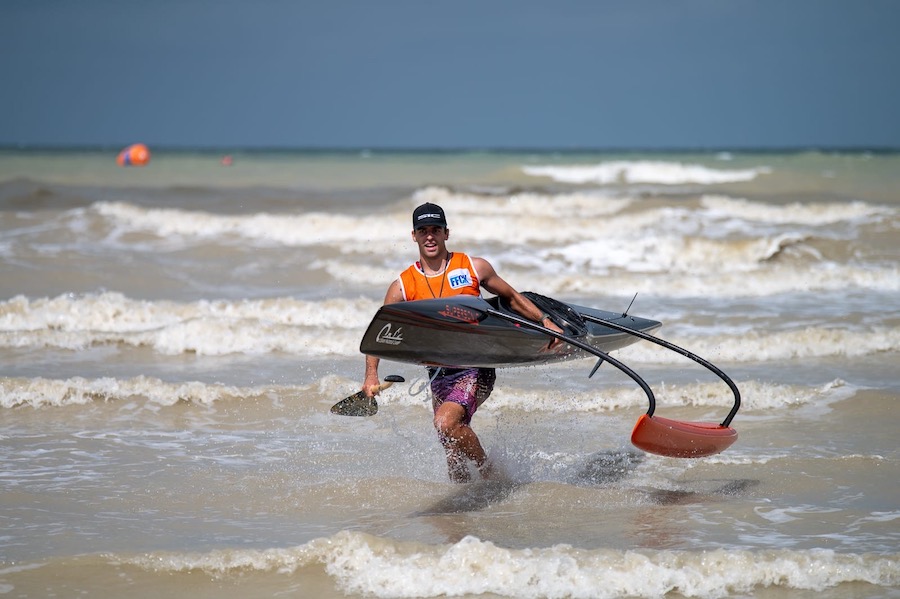
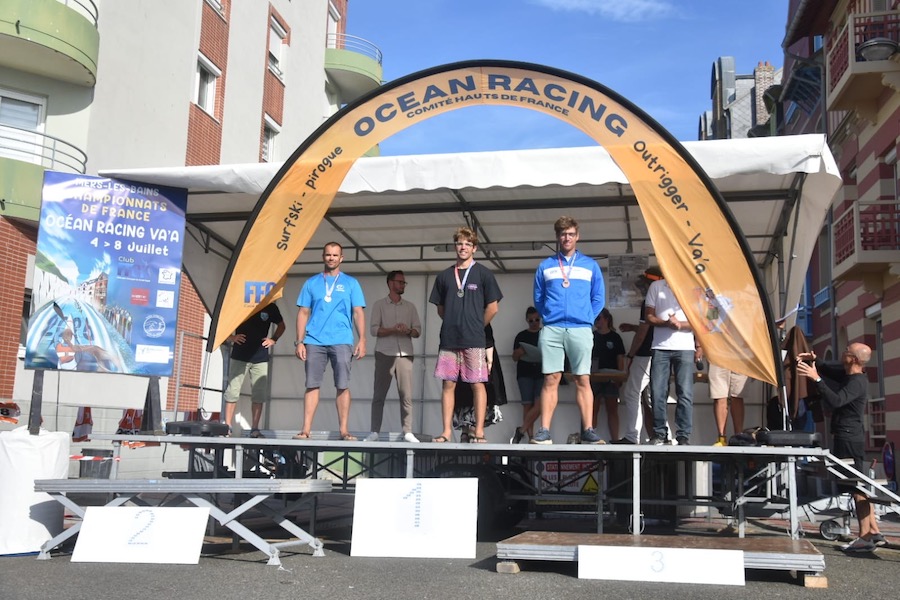
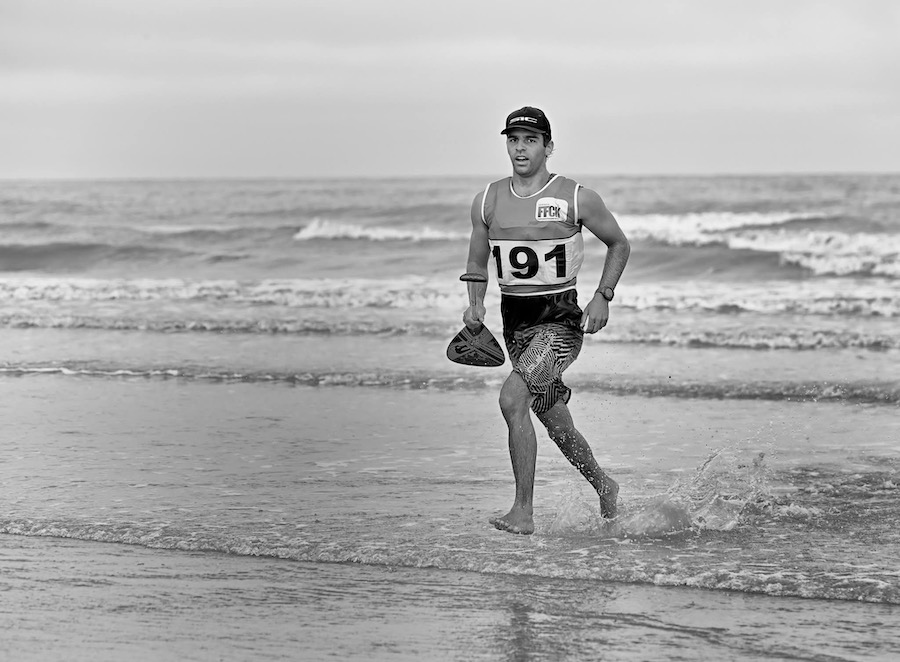
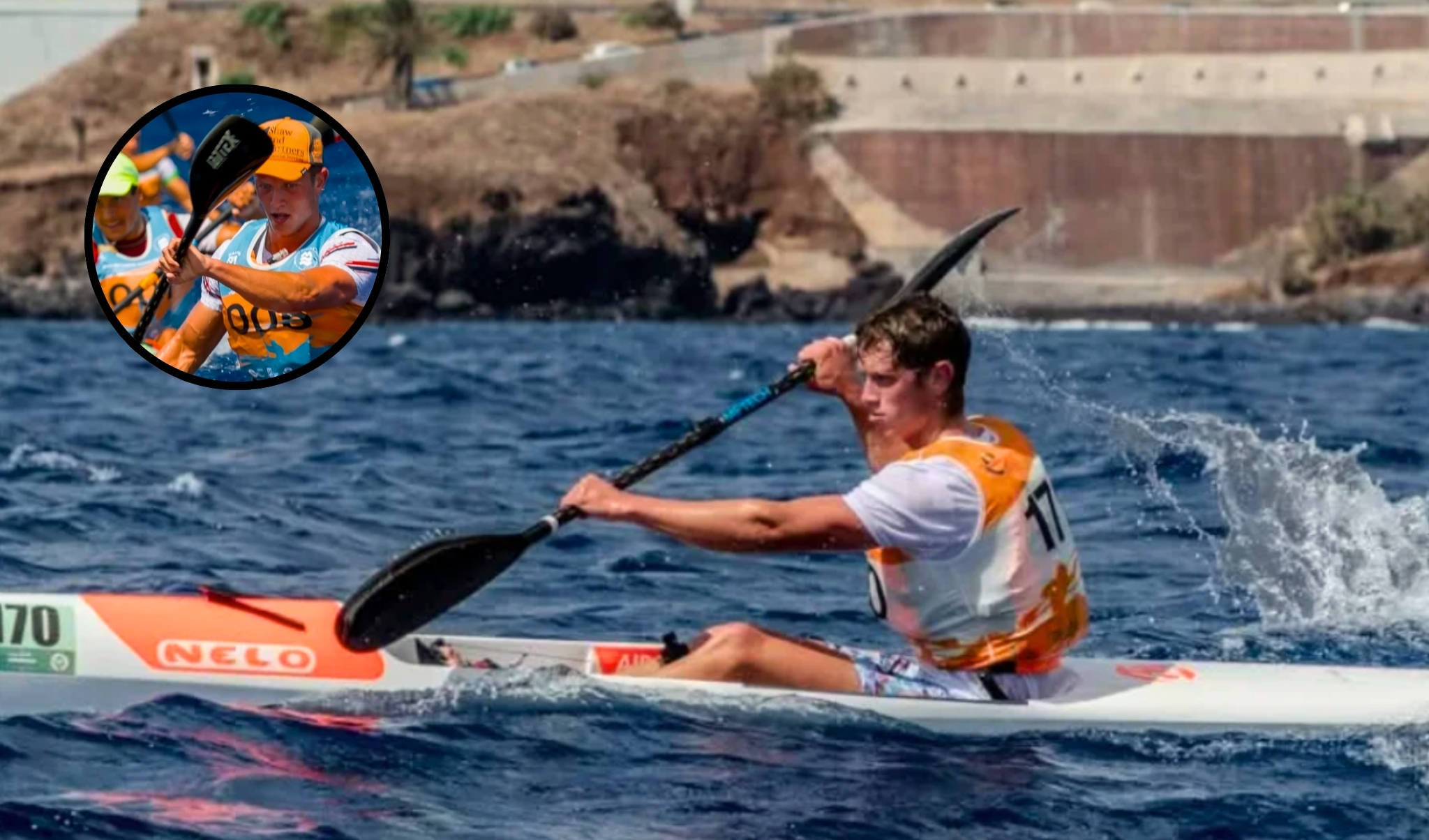
At just 18 years old, Louka Brard has already established himself as one of the brightest young talents in French Ocean Racing. The Breton paddler delivered an outstanding performance at the 2026 French Championships, claiming four national titles and one bronze medal across five different disciplines.
A passionate waterman and first-year sports science student in Brest, Louka has spent the last five years building his project alongside his coach. Now racing withNalu Canoes, he is preparing for the upcoming European Ocean Racing Championships in Brest before turning his sights towards international competition.
We caught up with Louka to discuss his French Championship campaign, his race strategies, teamwork in OC2, the next generation of paddlers and his ambitions for the future.
Hi Louka, before we dive into your French Championship , could you introduce yourself to our readers?
Hi, I’m Louka. I’m 18 years old and I live in Brittany, France. I’m currently in my first year studying Sports Science at university in Brest.
I’m a paddler in both SUP and outrigger canoe, but above all, I’m a waterman. I love everything related to the ocean, whether it’s paddling, sailing, swimming or any other watersport. Being on the water has always been my passion, and that’s what drives me every day.
A remarkable French Championship
How are you feeling a few weeks after the French Championships? Looking back at everything you’ve achieved, how do you reflect on your performance?
It’s been about three weeks since the Championships finished, and I’m still really happy with the results. Winning four gold medals and one bronze medal across five races was an incredible feeling. We’ve been working towards this goal with my coach Amaury Dormet for almost five years, so reaching the highest level in France is a great reward for all the work we’ve put in over that time.
Five disciplines in four days
Winning across five disciplines sounds impressive, but very few people realise how demanding the schedule actually is.
You competed in five different disciplines. For those who have never experienced the French Championships, how are the races organised and how do you manage the recovery between events?
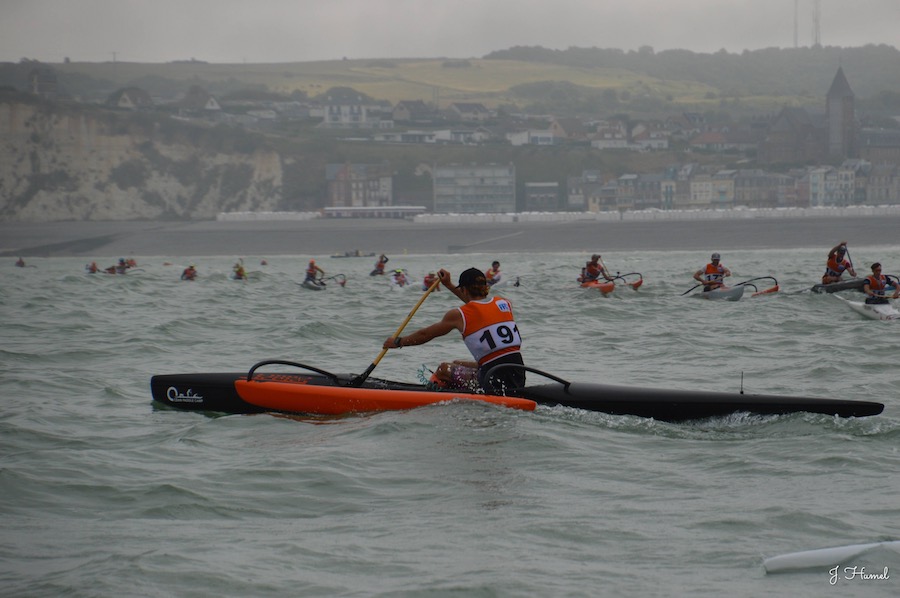
One of the great things about the French Championships is the opportunity to compete in several different disciplines. I raced the OC1 long distance, OC1 short distance, OC2 long distance, V6 Youth, and V6 Men’s events. The Championships take place over four days. Saturday is dedicated to the individual long-distance race, Sunday to the OC2 long distance, while Monday and Tuesday feature two races each day, with an individual race in the morning and a crew race in the afternoon. During the first two days, having only one race each day gives us plenty of time to prepare and recover. On Monday and Tuesday, we usually have around three to four hours between races, which is enough time to rest, recover and prepare for the next challenge.
Different races, different strategies
Although both events are raced in OC1, the long-distance and short-distance races require completely different approaches.
How did your strategy change between the two formats?
The strategy always depends on the ocean conditions, the wind strength, the swell, and of course the course itself. For the long-distance race, I chose to start at a controlled pace, testing my competitors during the upwind section before really attacking on the downwind, where I tried to open a gap and take advantage of the surfing conditions. The short-distance race was completely different. My plan was to start as fast as possible, see who could stay with me, and then keep accelerating whenever the course offered opportunities to surf and connect the bumps.
Building chemistry in OC2
Success in OC2 is about much more than individual fitness. Synchronisation, communication and trust all play a key role.
You raced alongside Quentin Guillot in OC2. How did you build your partnership, and what makes a successful crew?
This was actually the third race Quentin and I had done together this season after the Brittany Championships and a national selection race. Having raced together before the French Championships gave us time to learn how each other paddles, find our rhythm and improve our communication. The most important thing is to paddle together as one. You need to know when to accelerate, when to settle the pace and how to react together during the race. Everything came together during the Championships. We managed to break away from our competitors during the upwind section before working together to surf efficiently on the downwind. We were really pleased with the race we put together. And it’s not over yet, we’ll also be racing together at the European Ocean Racing Championships in Brest, where we’ll finally have the opportunity to measure ourselves against some of Europe’s best crews.
The next generation
One of Louka’s four French titles came with a young V6 crew, highlighting the strength of the next generation of French paddlers.
How do you see the future of young athletes in Ocean Racing?
This season I joined the Groix V6 Youth crew, which is made up mainly of paddlers under the age of 23. If I’m not mistaken, they’ve now won the V6 Youth title for seven consecutive years, so I was really proud to be part of that team and race alongside such talented young athletes. There are already a lot of young kayakers competing at a very high level in Ocean Racing. However, there are still very few young people involved in outrigger canoe racing. I’d really love to see more young paddlers discover the sport because it’s an amazing discipline with a fantastic community.
Choosing the right equipment
Equipment can make a real difference when competing at the highest level.
What canoe did you use during the French Championships?
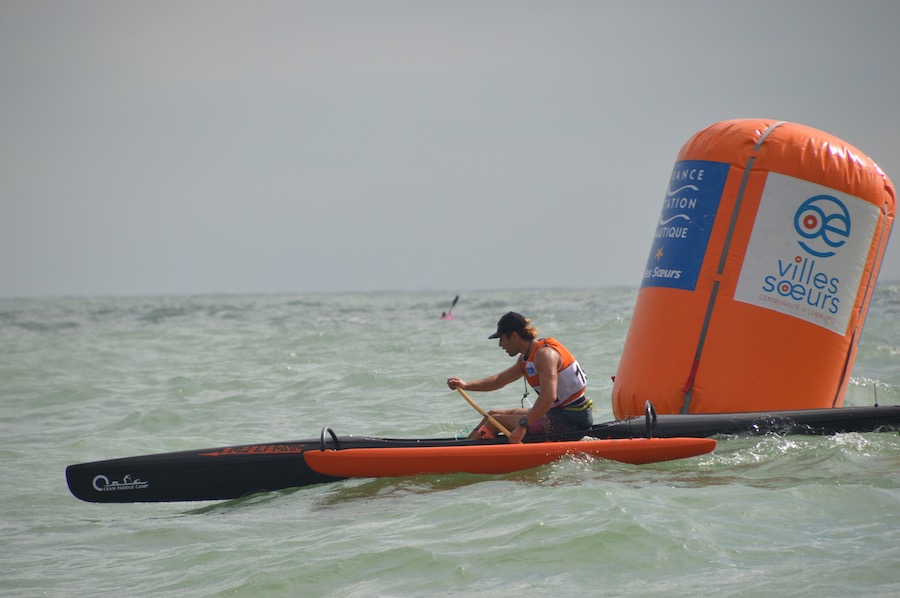
I race with Nalu, specifically the Supersonic model. It’s the canoe I use for all my OC1 races. It’s a performance-oriented boat designed for speed, and it’s performed incredibly well throughout the national circuit. The Supersonic suited the conditions at the French Championships perfectly, and I was really happy with how it performed throughout the event.
Looking ahead
With the French Championships behind him, Louka is already focused on the next challenge.
What are your goals for the rest of the season, and where do you want to take your career from here?
My main goal now is the European Ocean Racing Championships in Brest at the end of August, where I’ll compete in both the OC1 and OC2 events. After that, I’d really like to start competing more regularly on the international stage. I think that’s the next step in my development as an athlete. I want to measure myself against the very best paddlers in the world, gain experience racing internationally, and continue progressing by competing at the highest level possible.
Chaque année, la Seine devient le terrain de jeu de centaines de passionnés de sports de pagaie à l’occasion de La TraverSeine. Au cœur de Paris, kayaks, canoës, SUP et pirogues se retrouvent pour une traversée unique, offrant un autre regard sur la capitale et sur un fleuve qui a longtemps été associé à d’autres […]
Two years after the Azores, Europe’s best ocean paddlers return to battle this time on the Finistere coast in France for the continental crowns. The 2024 championships saw France’s Hector Henot claim his first European Open title, while Spain’s Judit Vergès Xifra secured her third. European titles will also be awarded across Junior, U23 and […]
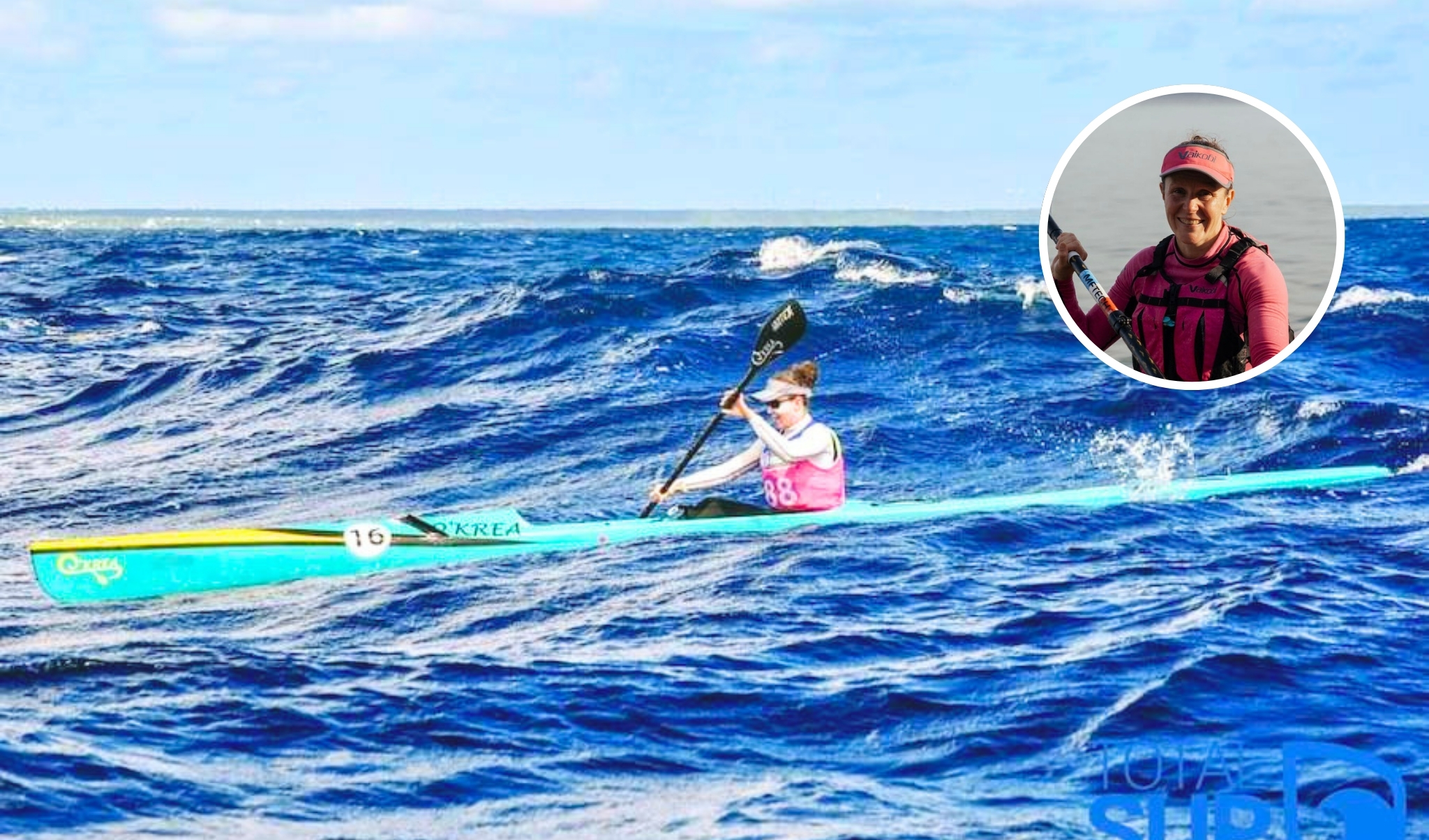
From discovering paddling at the age of 14 in Brest to competing on the international circuit, becoming a mother, and eventually returning to racing, Angie Leroux’s journey has always been closely connected to the ocean. Now, 22 years after first stepping into a kayak in Brest, she is preparing to compete at the European Championships […]
Based in Singapore and born from a genuine passion for paddling, SKILD is building a name for itself with technical apparel designed specifically for life on the water. At the heart of the brand is co-founder Christoph Renger, an active Dragon boat, OC and Va’a paddler who understands first-hand the demands of long hours in […]
Du 26 au 30 août prochains, Brest accueillera les Championnats d’Europe d’Ocean Racing, un rendez-vous majeur qui réunira les meilleurs spécialistes européens de surfski, mais aussi de pirogue océanique en OC1, OC2 et V6. Organisé par le Canoë Kayak Club Brestois (CKCB), l’événement ambitionne de faire rayonner toutes les facettes de cette discipline spectaculaire, tout […]
The German Open Ocean Championship, held during the Hawaiian Sports Festival, brought together some of Germany’s top outrigger canoe paddlers for a demanding day on the water. While many expected classic downwind conditions, Mother Nature had other plans. Instead of strong winds and ocean runners, the athletes faced intense heat, flat water, and a race […]
For more than 25 years, Jeff Holubeshen, a Nalu Canoes athlete, has been moving across water with the same quiet obsession: finding efficiency in every stroke. Based in Toronto, his journey has taken him through almost every form of paddle sport: dragon boat, sprint canoe, outrigger canoe, and stand-up paddle. Each one adding another layer […]
From the flat waters of sprint kayaking to the demanding conditions of international surfski racing, Marin lanée has built an impressive career by successfully combining two disciplines that rarely coexist at such a high level. A double European junior champion in sprint, junior vice world champion in Ocean Racing, and more recently bronze medallist at […]
Les Sables d’Olonne ont une nouvelle fois vibré au rythme des coups de pagaie et des chants polynésiens. Du 14 au 16 mai 2026, la 15e édition de la Vendée Va’a a tenu toutes ses promesses : spectacle, intensité et émotions sur l’Atlantique. Jour 1: Baptême du feu sous le vent vendéen Pas question de […]