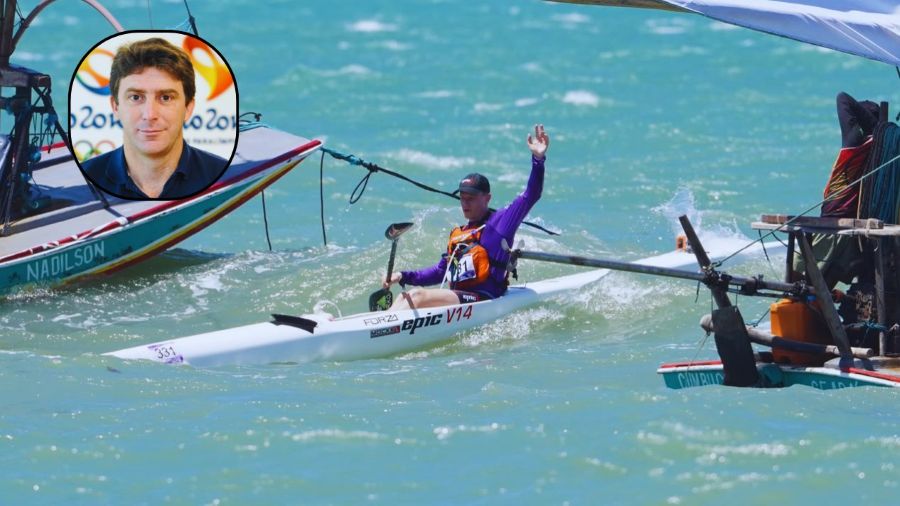
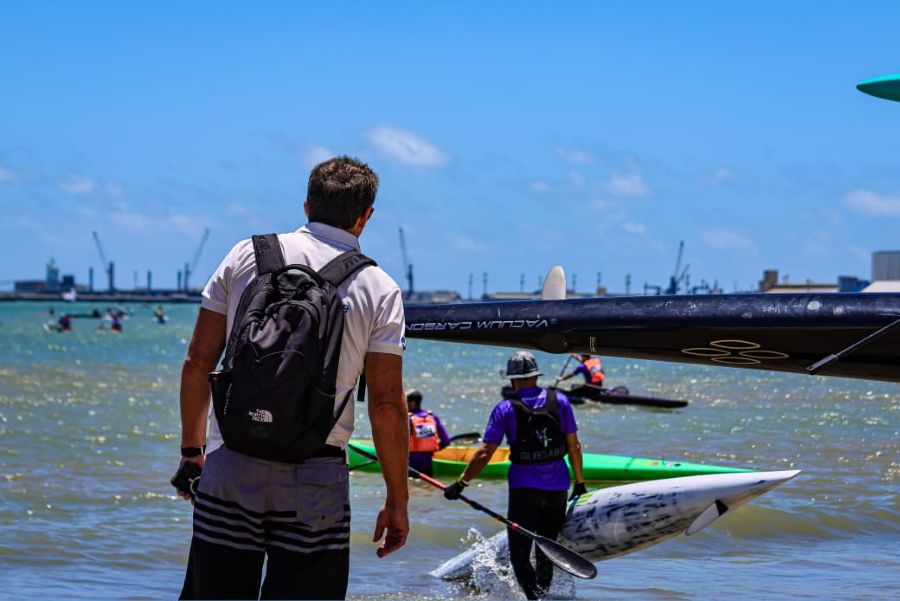
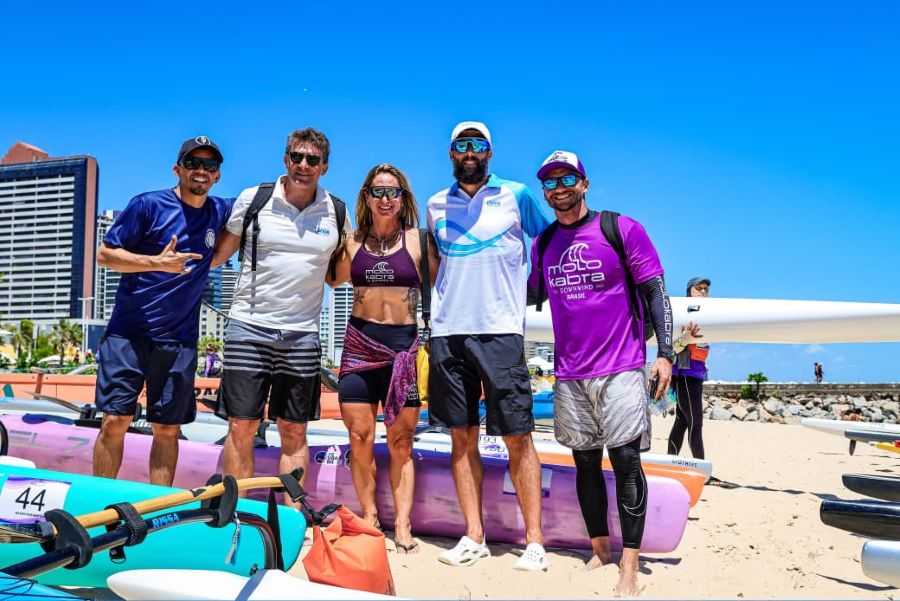
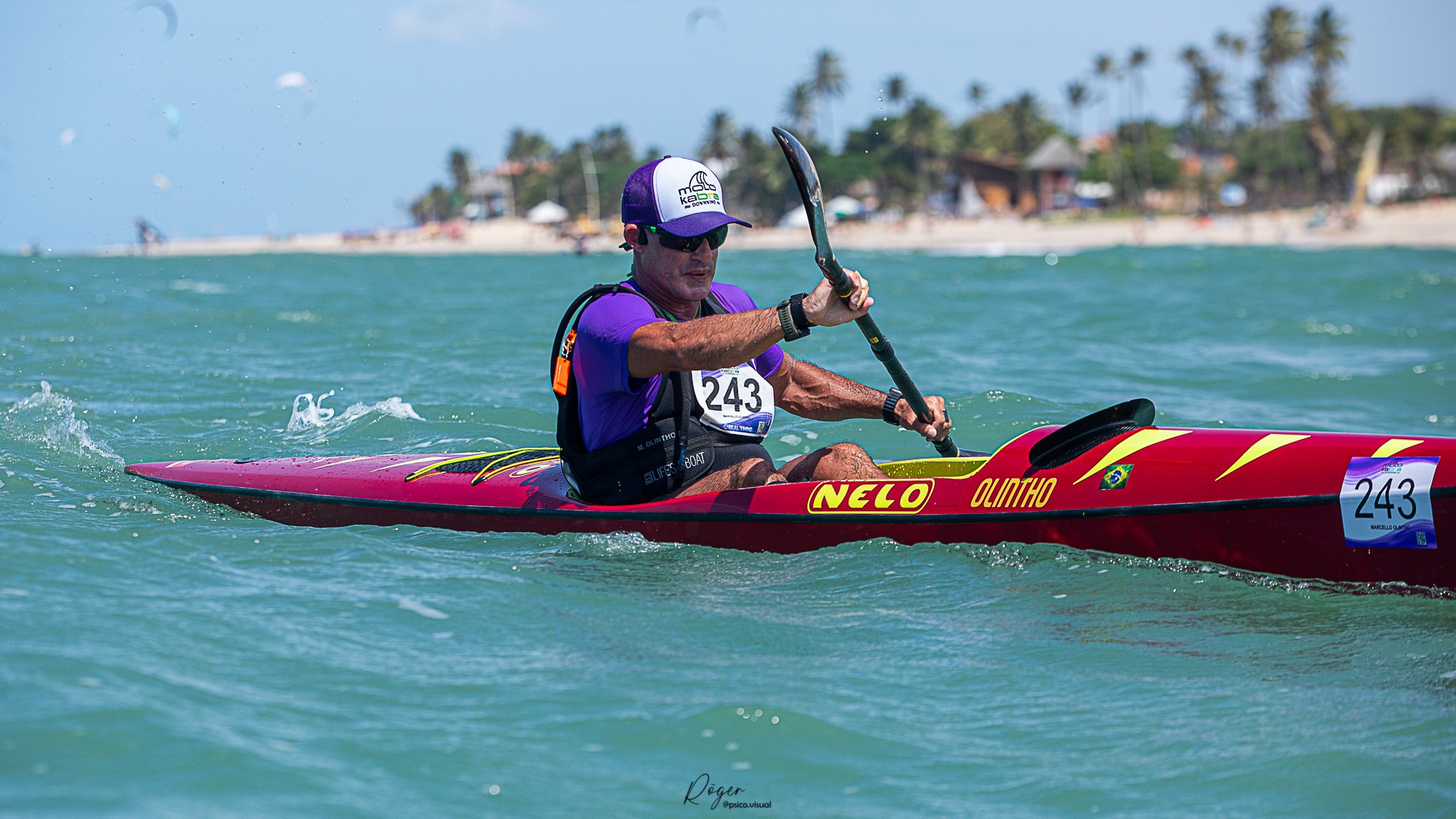
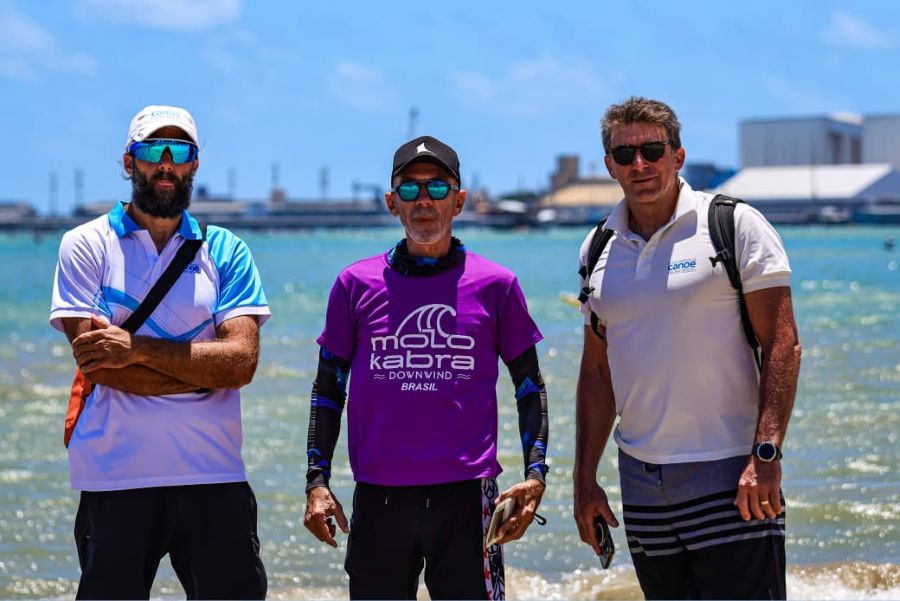
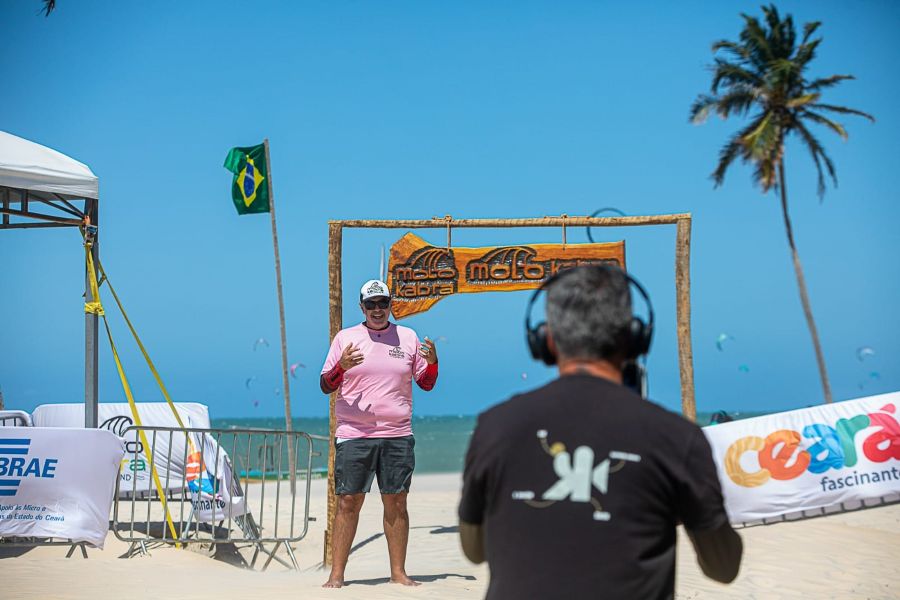
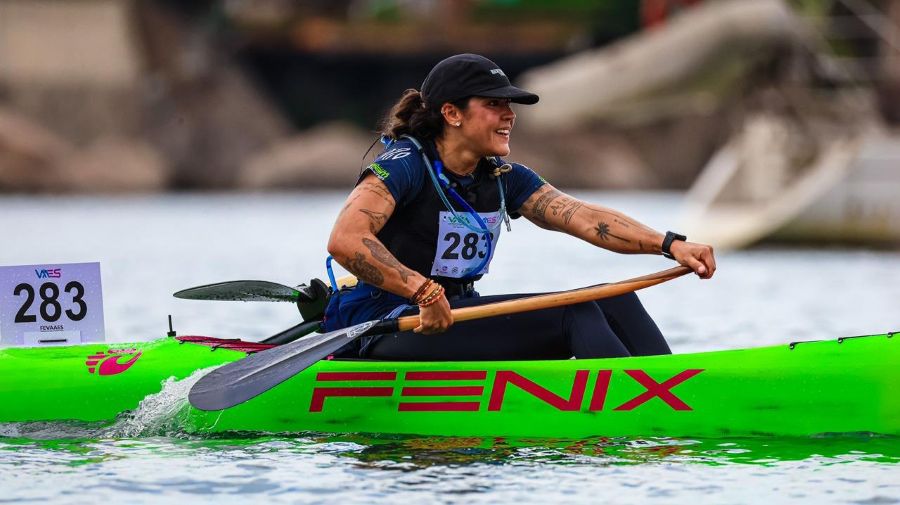
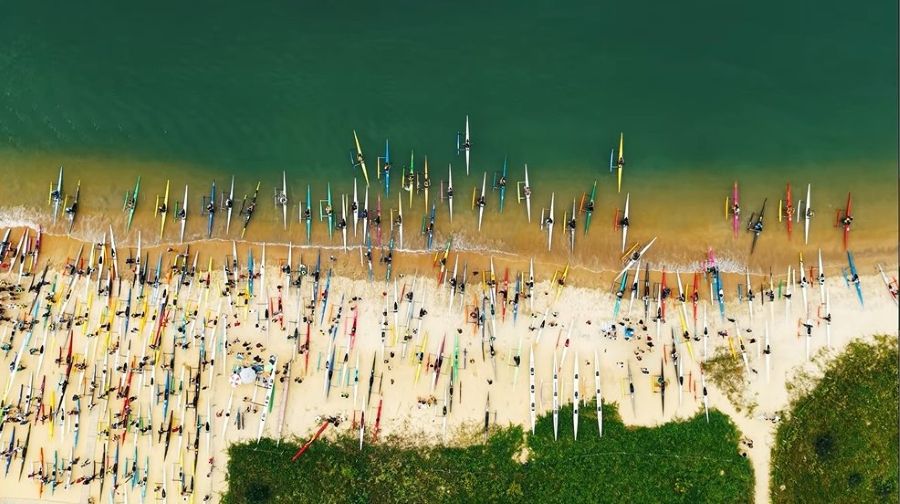
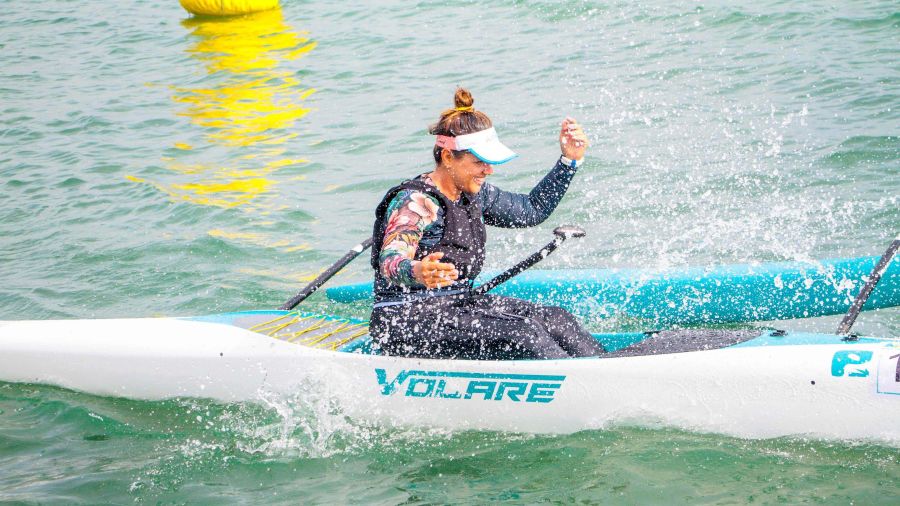
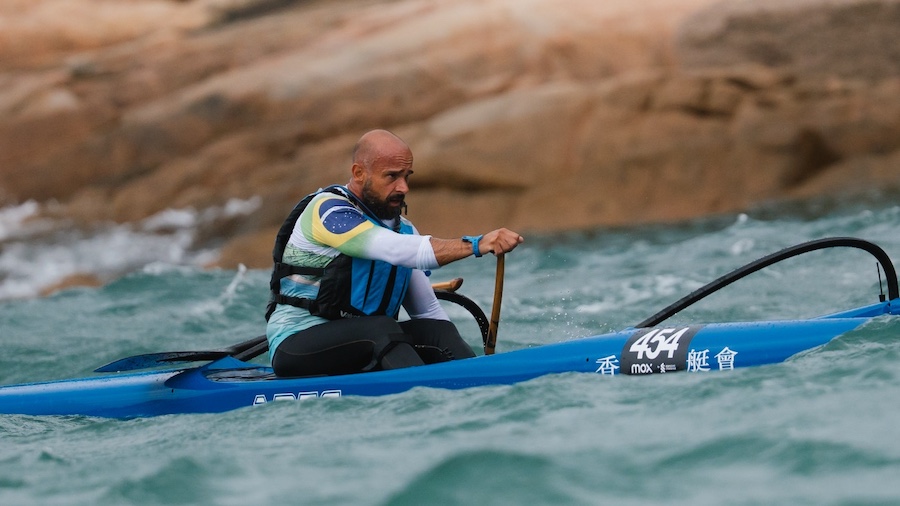
The 2026 MolokaBRA brought international attention to Ceará, Brazil, as Fortaleza hosted a round of the Surfski World Cup and welcomed elite paddlers from around the world. The event placed the Fortaleza–Cumbuco coastline at the centre of the international Ocean Racing scene, highlighting a destination that is becoming increasingly relevant to the sport.
For Sebastián Cuattrin, the event was an opportunity to experience this environment from a different perspective. A four-time Brazilian Olympian in canoe sprint and 11-time Pan American medallist, Cuattrin has spent decades at the highest levels of competitive paddling, later expanding his work into coaching, sports development and Polynesian canoeing.
His experience at MolokaBRA offers a unique perspective on the event, its place in the international surfski calendar and the growing role of Ceará in Brazilian Ocean Racing.
Sebastián, who are you, and how did canoeing become part of your life?
I am a very unassuming person, and I have always loved sport. Since I was a child, I practiced different sports — handball, volleyball, athletics.
I was fascinated by the challenge of paddling up the rapids of the Rio Doce in Governador Valadares. I started canoeing as a game. Canoeing became part of my life when I was 14 years old. I saw my friends paddling on the river behind the school where I studied, and I asked them to teach me how to do it — how to manage the river current, going up and down as they did.
From that moment on, canoeing became part of my life,my safe place.
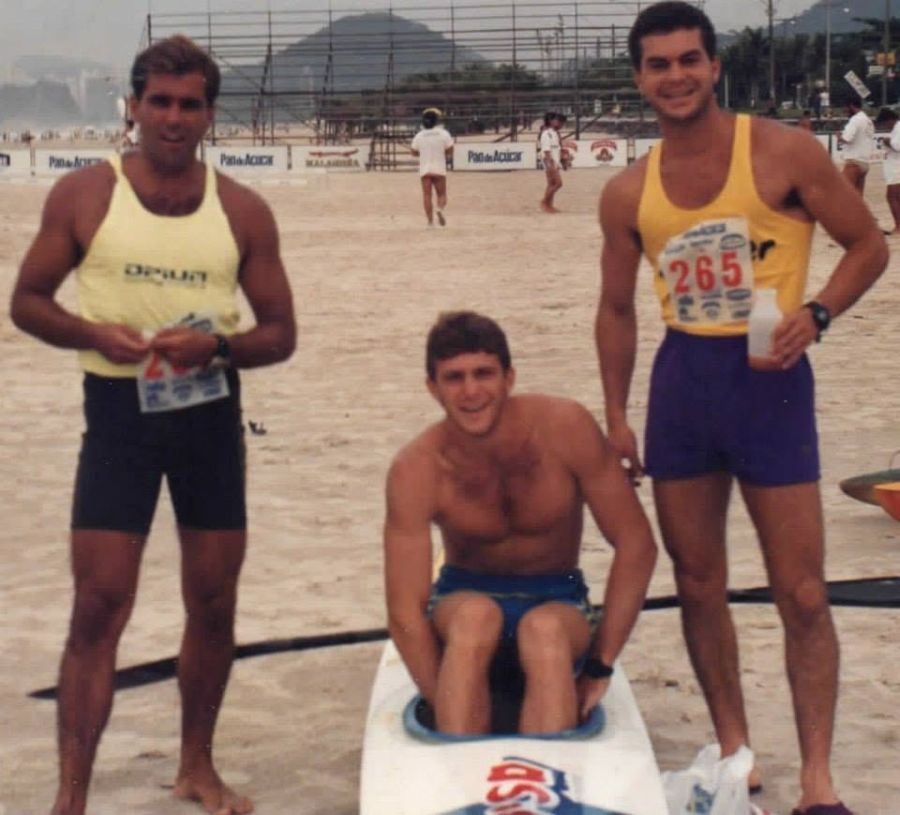
My parents encouraged me to stay involved in sport, and when I was 14, I moved to São Paulo after being called up to the Brazilian national team. I remained with the national team until I was 32, when I decided to stop competing.
I never imagined that I would go as far as I did — representing Brazil at the Olympic Games and reaching an Olympic final. At that time, reaching an Olympic final was something historic because canoeing had very little presence in Brazilian sport.
It was a career full of challenges, great experiences, hard work, medals and dedication. I competed at the Pan American Games and won several medals, but the most important thing is that I enjoyed the entire journey.
After my athletic career, I continued working in high-performance sport as a coach, coordinator and sports development professional. I worked with the Brazilian Canoeing Confederation, was involved in the Rio 2016 Olympic project and later joined the International Federation. Today, I work on the development of canoeing in countries where the sport is still growing, including coaching education and talent development.
Also I was born in Argentina and moved to Brazil when I was five years old. I consider myself Brazilian and have always felt Brazilian. I love Brazil and believe it is a fantastic country, full of opportunities and good things, especially because of its wonderful people.
What has your journey as an athlete and coach taught you about high performance in Ocean Racing?
My journey as an athlete and coach was not directly connected to Ocean Racing. It was mainly connected to sprint canoeing.
However, I have a long connection with Polynesian canoeing. I am currently a partner in a Va’a club in Espírito Santo, Maui Va’a, together with Pedrinho Feischer. Polynesian canoeing, or Hawaiian canoeing, has been part of my life since 2000, when I started competing, so I have a very strong connection with Va’a.
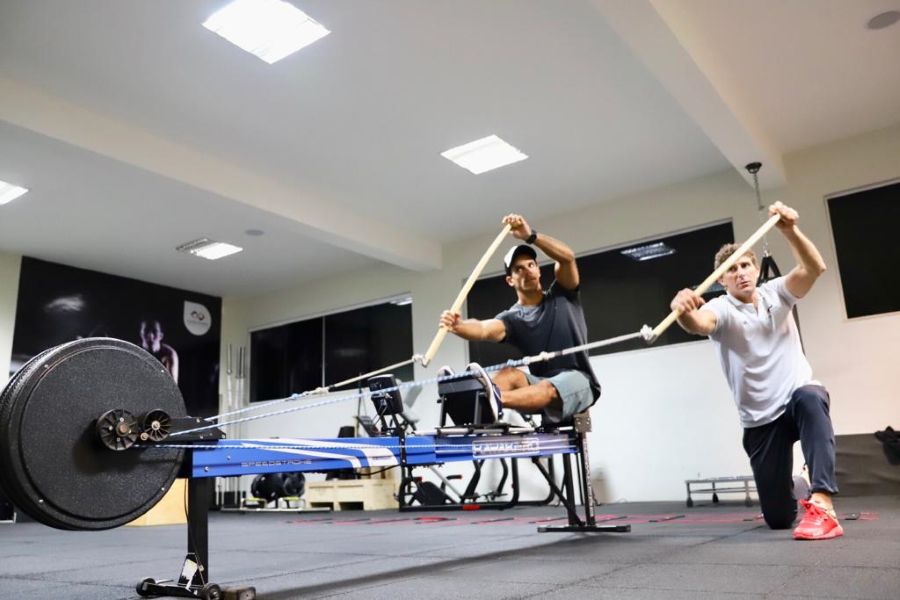
I have never been a Surfski or Ocean Racing coach, but my experience in high-performance sport gives me enough knowledge to contribute to athletes competing in Ocean Racing, particularly in physical preparation, paddling technique and movement quality. I can evaluate these aspects together with their coaches and help identify areas that can be improved.
I also have some experience with waves and how to surf them, coming from my background in Polynesian and Hawaiian canoeing.
More broadly, my years as an athlete, coach, event coordinator and sports development professional have given me a broad understanding of high-performance sport and athlete development.
You experienced MolokaBRA up close. What did you find in Ceará that may not be obvious to someone looking from the outside?
What I found in Ceará that may not be obvious to someone looking from outside is precisely the quality of the wind course you have there. Ceará has consistent winds for around four months of the year, and they are unidirectional. In other words, the wind consistently moves from one location to another.
This makes the logistics of Ocean Racing much easier because we know that the start will be in one place and the finish will be somewhere else, and that direction does not change.
The consistency of the wind is fundamental because the wind creates the waves and contributes to the excellent course you have there. The combination of currents and different water temperatures also helps form the waves that we need for Ocean Racing.
These are things that people do not necessarily see from the outside. They see a lot of wind and a lot of waves, but they may not understand why these conditions are so important for Ocean Racing.
The waves allow us to gain a great deal of speed. We can take advantage of the ocean, and the athlete’s ability to read the sea is fundamental to saving energy, gaining speed and maintaining a high level of performance throughout the competition.
What does having Fortaleza on the World Cup calendar mean for Brazil?
I can say that Brazil represents one of the great powers in Ocean Racing, especially after discovering this wind course in Ceará, in Fortaleza, together with the competition and the local organization, which is fantastic.
This represents a great deal for Brazil, and I am certain that it will produce many results at an international level in the coming years.
What can a World Cup round bring to athletes and to the development of the sport in Brazil?
It is almost the highest level you can pursue in terms of competition. Above that, you have the World Championships, and beyond that, the Olympic Games.
So the fact that MolokaBRA is hosting a World Cup event in Ocean Racing is extremely important, not only for the athletes, but also for the development of the sport in the country and in the region.
It increases the visibility of the sport among authorities and among people who may want to practice it. It attracts the attention of the media and local authorities, creating opportunities for support and for the development of more schools along the Ceará coastline, which is fantastic.
The fact that Brazil is hosting a World Cup round is extremely important in all these aspects: in terms of media, visibility among authorities, visibility for the event and recognition for the organization of the event, which was excellent.
It is also important for thinking about the future — developing schools and creating new competitions in Ceará.
Photo: Roger Rondon / Molokabra
Several factors make Ceará such a unique venue for Ocean Racing. What stands out to you most?
There are several factors that make Ceará such a unique venue for Ocean Racing. The first, and I think the most important, is the technical quality of the course between Fortaleza and Cumbuco.
It is an exceptional wind course where athletes can develop speeds well above those considered average in other competitions.
They are able to make good use of the waves, and the consistency of the wind and the waves helps the athletes considerably. This makes the Ceará course very special.
The warm welcome is another important factor. We were very well received, and this is also very important when considering future events.
So I would highlight the technical quality of the course, the technical quality of the organization and the warm welcome that the people of Ceará and Fortaleza gave us — to the athletes, the technical team and even the International Federation itself.
After everything you experienced in Ceará, what future do you see for Ocean Racing in Brazil?
I see a bright and promising future for Ocean Racing in Ceará.
The state has everything it needs to grow, to establish itself and to create canoeing schools and new athletes, making use of the excellent technical quality of the wind course you have there.
I am certain that Ceará has the potential to produce athletes who will compete at the Ocean Racing World Championships in the near future.
Surfski World Cup Stop 3: Race Results and Winners
South Africa’s Mark Keeling delivered the fastest time of the day, winning the men’s 30-kilometre race in 1:49:11. Brazilian paddlers Alexandre Felipe do Nascimento Ferreira finished second in 1:54:45, followed by Luiz Wagner Pecoraro in 1:55:45.
In the women’s race, Brazil’s Ariela Pinto took the victory in 2:26:17, ahead of Mariana Muriel Victorio Falconi, who finished in 2:27:01, and Bruna Abreu Libório, who completed the podium in 2:30:30.
Men — World Cup Overall
Position
Athlete
Country
Time
1
Mark Keeling
South Africa
1:49:11
2
Alexandre Felipe do Nascimento
Brazil
1:54:45
3
Luiz Wagner Pecoraro
Brazil
1:55:45
4
Washington Igor Santos Cruz
Brazil
1:59:15
5
Ariel Alves de Souza
Brazil
2:02:07
6
José Marcos Mendes Filho
Brazil
2:02:08
7
Joaquin Sanchez Blazica
Argentina
2:02:37
8
Fábio Demarchi
Brazil
2:03:05
9
Gaëtan Bajolet
France
2:03:36
10
Sebastian Luis Vergauven
Argentina
2:03:58
Women — World Cup Overall
Position
Athlete
Country
Time
1
Ariela Pinto
Brazil
2:26:17
2
Mariana Muriel Victorio Falconi
Brazil
2:27:01
3
Bruna Abreu Libório
Brazil
2:30:30
4
Carmen Da Silva
Brazil
2:31:40
5
Luanna Betinardi
Brazil
2:39:02
MolokaBRA Downwind Age-Category Champions
Alongside the World Cup overall results, the MolokaBRA Downwind race featured separate Surfski age categories. These results highlight the depth of the field, with athletes competing across Senior, Masters and Para Surfski divisions.
Women
U23: Bruna Abreu Libório — 2:30:30
Master B, 40–44: Ariela Pinto — 2:26:17
Master C, 45–49: Vanessa Batista — time not available
Master D, 50–54: Diana Nishimura Carneiro — time not available
Master E, 55–59: Gisele Monte — 2:56:57
Master F, 60–64: Carmen Da Silva — 2:31:40
Men
Senior, 24–34: Mark Keeling — 1:49:11
Master A, 35–39: Alexandre Felipe do Nascimento Ferreira — 1:54:45
Master B, 40–44: Fábio Demarchi — 2:03:05
Master C, 45–49: Washington Igor Santos Cruz — 1:59:15
For Maria Clara, Molokabra isn’t just another stop on the calendar, it’s practically a homecoming. Now competing for her third consecutive year, the Brazilian paddler arrived in Ceará fresh off a rainy stretch in Ilhabela and stepped straight into the trade winds she’s come to know so well. Her opening descent delivered a personal-best top […]
Welcome to MolokaBRA Downwind 2026! Welcome to Ceará, Brazil, for the 8th edition of MolokaBRA Downwind — one of the biggest downwind events in Latin America and a major gathering for ocean paddling. Taking place from September 18 to 27, 2026, along the Ceará coastline, MolokaBRA brings together athletes from Brazil and around the world […]
There are places in the world where water sports fit naturally into the rhythm of daily life. Fortaleza, in the state of Ceará, in the North East of Brazil is one of those rare destinations. From the first morning on Beira Mar, it becomes obvious: here, the ocean isn’t a backdrop — it’s the beating […]
Iloha Eychenne claimed an impressive victory in the women’s race at stop #2 of the ICF Canoe Ocean Racing World CUP Tahiti, finishing well ahead of the rest of the field after 23 kilometres of open ocean and lagoon paddling. But for the waterwoman, 3 x Va’a World Champion among other accolades, the result represented […]
[English] The 2026 Brazilian Va’a Championship in Vitória, Espírito Santo, Brazil brings together the country’s top paddlers for a high-intensity weekend of V1, OC1, OC2, and V3 racing in one of Brazil’s most iconic coastal venues. The 2026 Brazilian Va’a Championship will be available to watch live or on replay, so fans can follow every […]
O cenário náutico nacional voltou seus olhos para a capital capixaba, Vitória (ES) — cidade conhecida por suas raias desafiadoras —, que nos dias 30 e 31 de maio sediou o Campeonato Brasileiro de Va’a Maratona 2026. Realizado sob a responsabilidade da CBVA’A (Confederação Brasileira de Va’a), a entidade máxima da modalidade no país, o […]
Nascida e criada em Niterói, a cidade fluminense que se consolidou como a capital e o principal polo de Va’a (o esporte milenar da canoa havaiana) no Brasil, Danielle Chevrand construiu uma trajetória pouco comum no universo das águas. Formada em jornalismo e com passagens marcantes por grandes redações esportivas e na gestão de comunicação […]
Brazilian paddler Alex Miranda has built one of the most diverse journeys in ocean paddle sports. Originally from Recife and most recently based in Ilhabela — one of the biggest hubs for ocean paddling in the state of São Paulo — he has now returned to Hong Kong to take on an exciting new chapter […]
South Africa’s Kira Bester and Portugal’s Bernardo Pereira opened the 2026 ICF Canoe Ocean Racing World Series in dominant fashion, claiming victory at the Madeira Ocean Racing Challenge, the first stop of the season. Pereira delivers at home Racing on familiar waters, Bernardo Pereira confirmed his status as one of the sport’s rising leaders. The […]