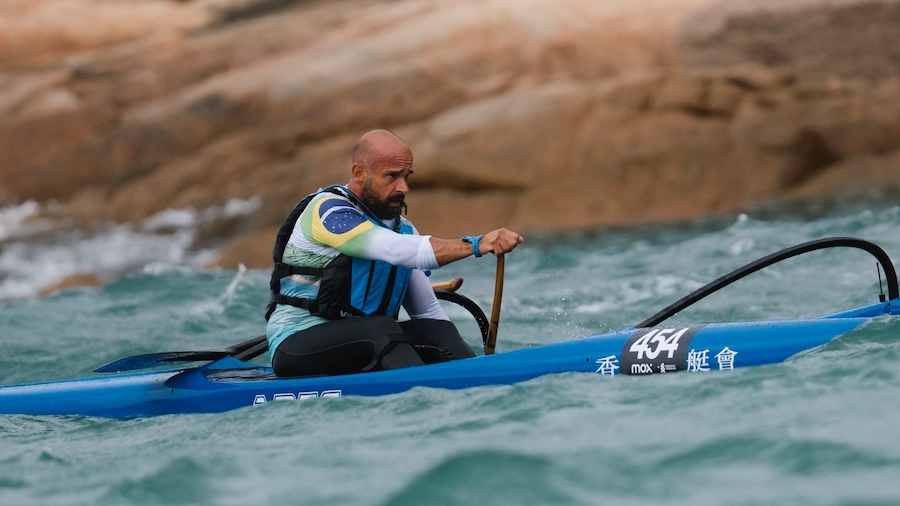
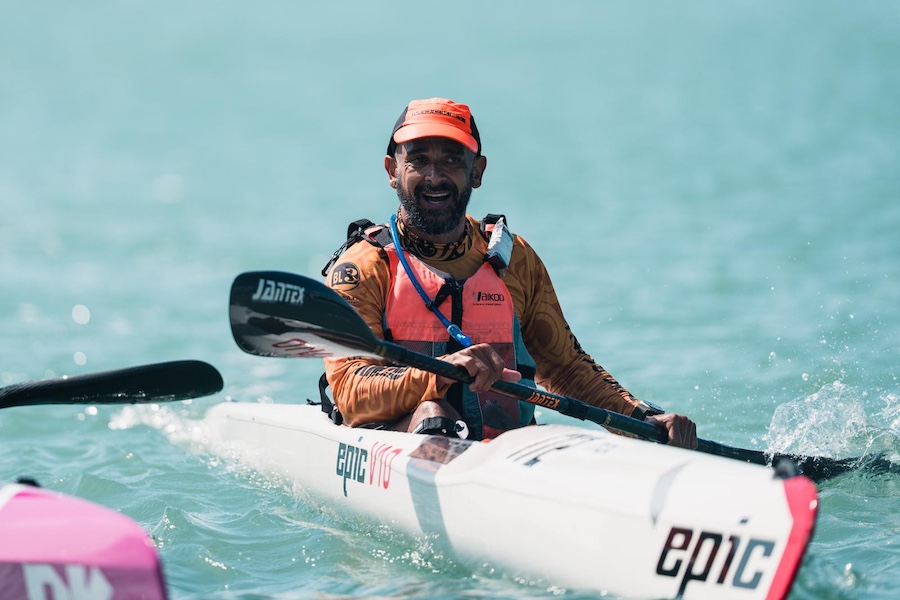
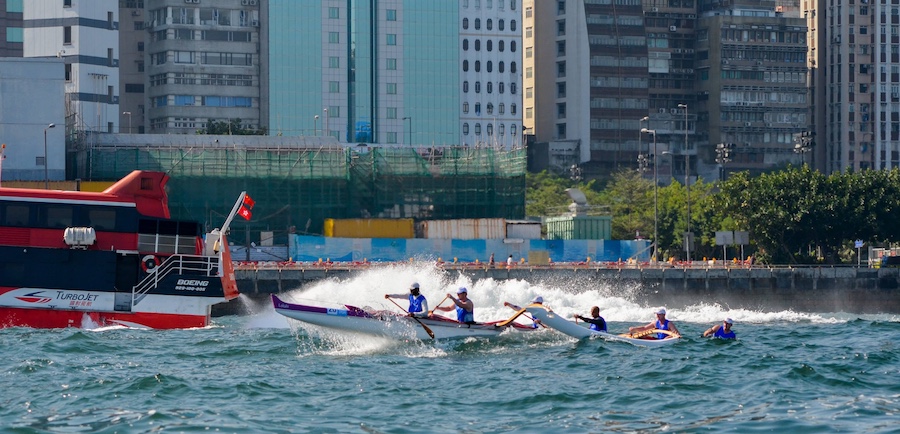
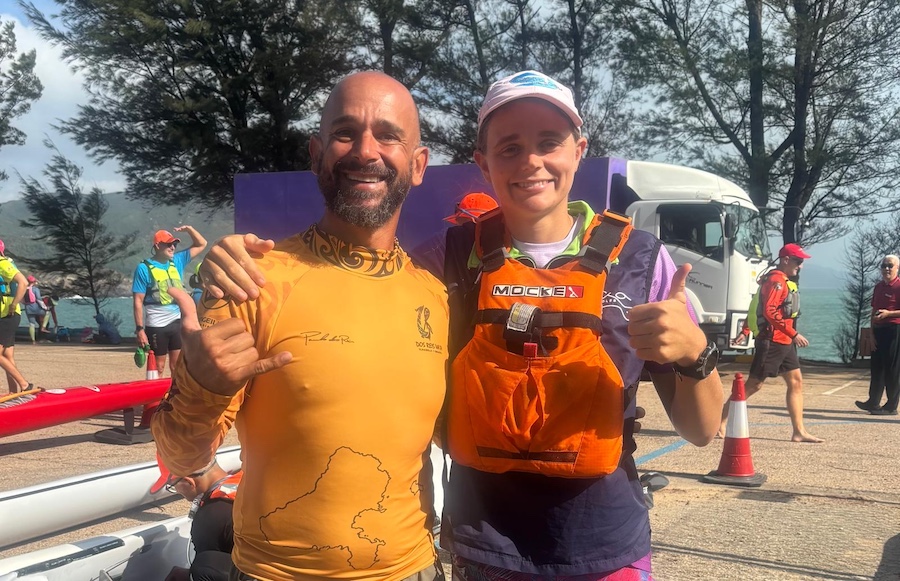
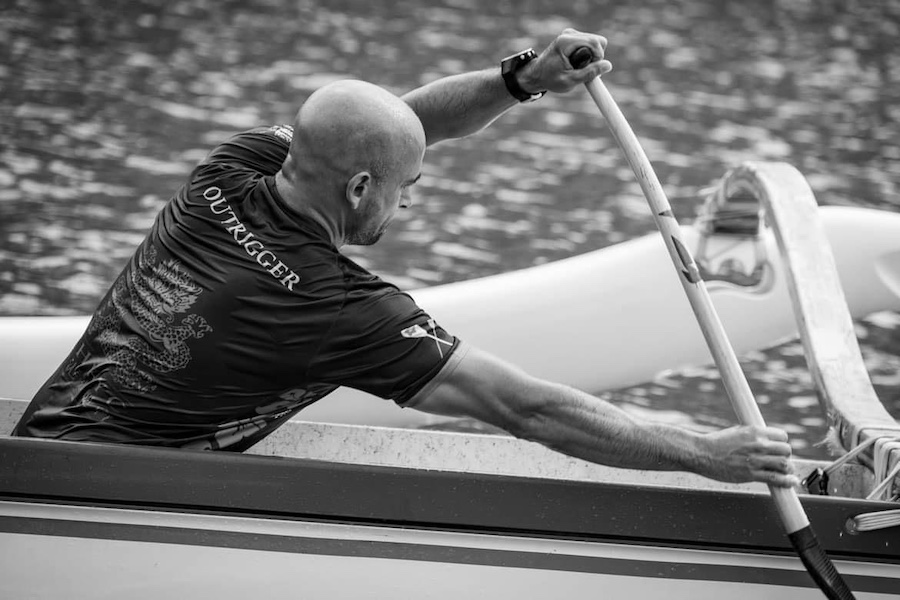
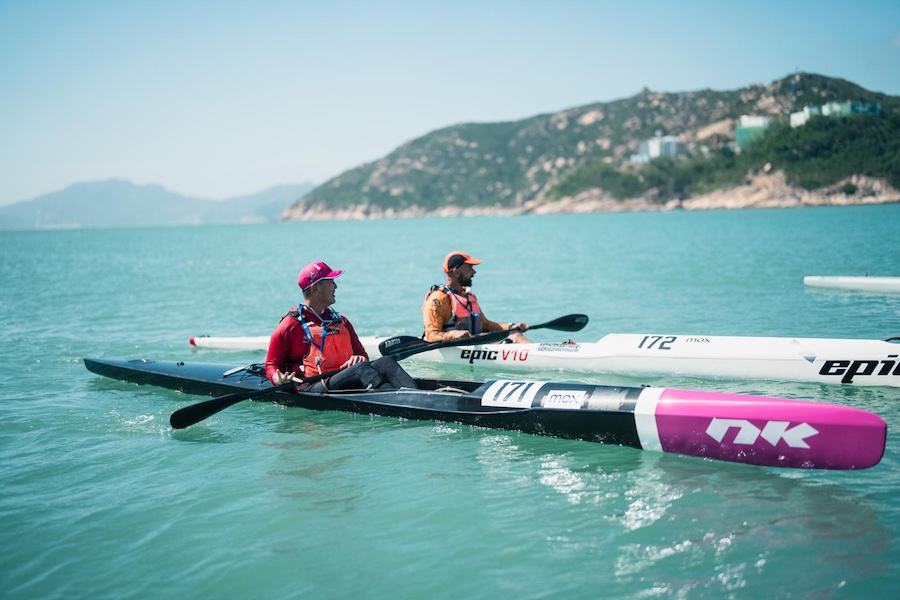
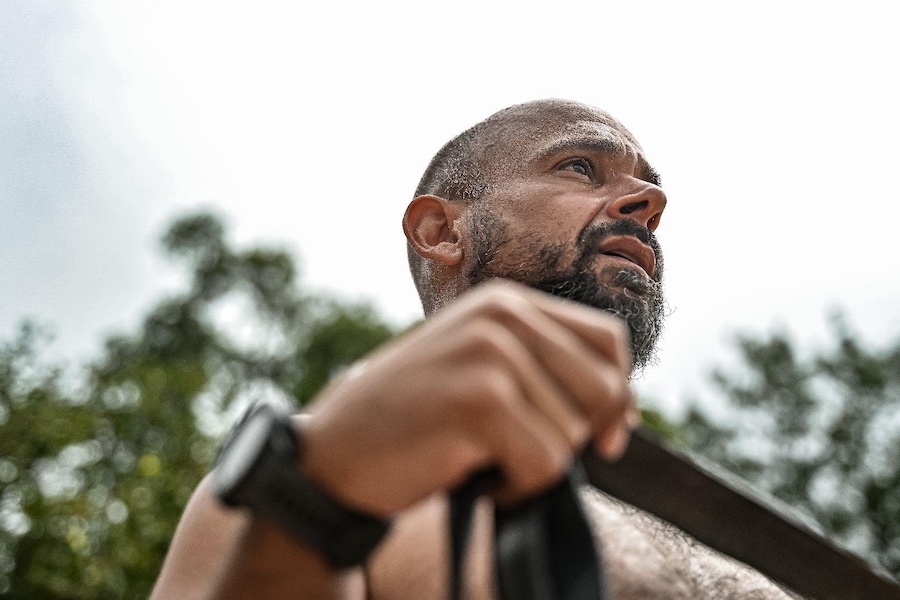
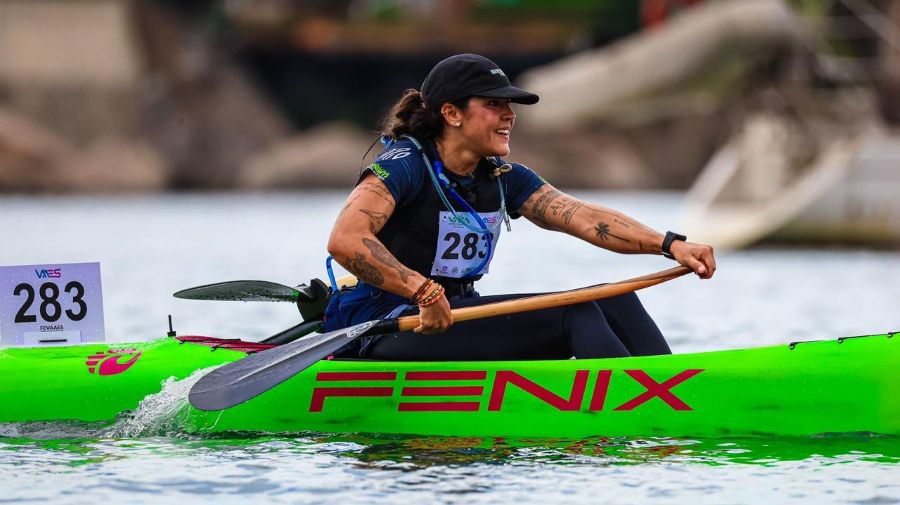
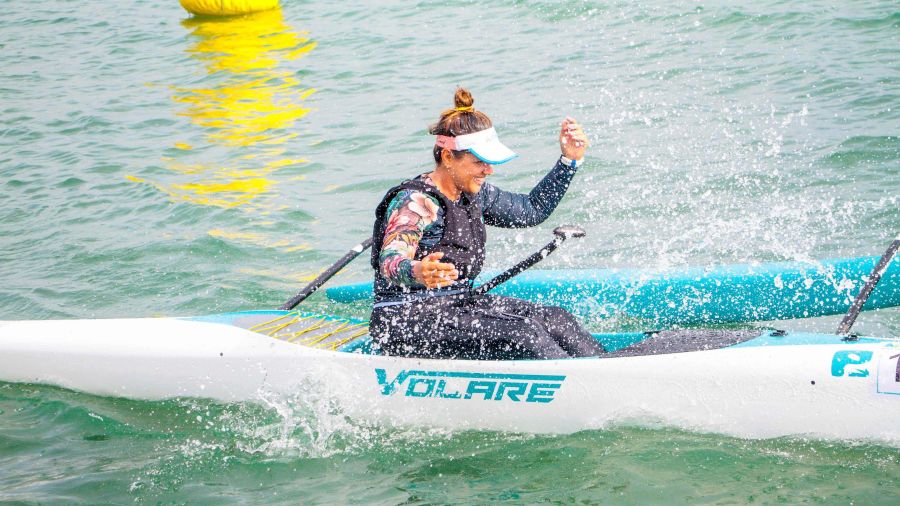
Brazilian paddler Alex Miranda has built one of the most diverse journeys in ocean paddle sports. Originally from Recife and most recently based in Ilhabela — one of the biggest hubs for ocean paddling in the state of São Paulo — he has now returned to Hong Kong to take on an exciting new chapter as Head Paddle Sports Coach at the Royal Hong Kong Yacht Club. Now over 50 and still competing, coaching, and evolving, Alex has never limited himself to a single craft. From dragon boat and OC6 to V1 and surfski, his paddling life has been defined by constant movement between disciplines, oceans, and communities. Rather than specializing in one boat, he believes every craft develops different qualities, creating links between muscle memory, technique, teamwork, and ocean knowledge. In this conversation, Alex shares why changing crafts may be one of the most powerful ways to grow as a paddler — and why curiosity remains his strongest engine after all these years.
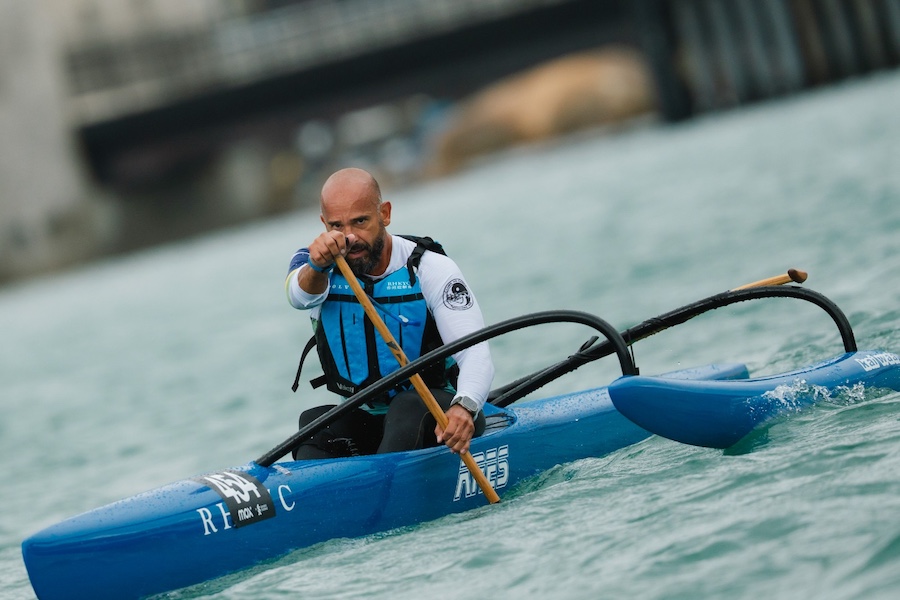
Credit: Keith Leung / Instagram @keith.klf @vrcaceseries
Alex, to begin with, tell us a little about your journey in ocean paddling. How did your connection with the ocean begin, and which disciplines and experiences have shaped your path the most over the years?
I grew up in Recife, Brazil, so I always had a connection to the ocean, but my ocean paddling life only started when I was almost 40. In 2012, I was offered a job in Hong Kong and moved to Lamma Island. It was on Lamma that I met a happy group of drunken dragon boat paddlers at a local bar. Dragon boating season was over, but they invited me to join their outrigger club, Lamma Outrigger Canoe Club. I immediately fell in love with the sport and started paddling several times a week with them and their sister dragon boating club, the Lamma Dragons. On a trip to Hawaii with my teammates, we had a whale and her calf surface so close to us that we could look into her eye. I knew then that I could never live away from the ocean and paddling again.
After Lamma, I moved to Rio in 2013 and joined Rio Va’a. That was my first experience with a very competitive team and it blew me away. I was so stoked by paddling that I took time off work to spend a few months in the Big Island (ed. note: Hawaii) , where I had the good fortune to paddle with the Puna Canoe Club under the guidance of Afa Tuaolo. Coach Afa’s commitment to building a true paddling ohana (ed. note: family in hawaiian) at Puna was really foundational for me and he is one of the people that I try to emulate.
When I got back to Hong Kong, I decided to join VRC, Victoria Recreation Club. I went back to Hawaii with VRC in 2016 for the Molokai Hoe and we arrived in 3rd place in the Masters 40 category. After a few years at VRC, I started coaching their women’s team and a group of VRC paddlers joined forces with paddlers from the Royal Hong Kong Yacht Club to go to Tahiti and participate in the IVF World Distance Championships in 2017. A teammate and I rented a little chalet at the Team OPT facilities, and they let me try paddling a V1 for the very first time. I was instantly hooked! It was too late to enter the IVF competition, but I signed up for Te Aito and had a blast! When I returned to Hong Kong I bought a V1 from the very next shipment of canoes coming from Kamanu Composites, and started using it in local races. V1s are still rare in Hong Kong, but they are becoming more popular.
In 2019 I coached the men’s team that represented Hong Kong in the IVF World Championships in Australia. Several members of that team were paddlers with the Royal Hong Kong Yacht Club. They liked my work, and invited me to coach the team the following season, just in time for COVID to catch us all by surprise. I remained in Hong Kong and coached at the Yacht Club for 2 years until a work opportunity with my “real job” took me to Brazil. Since I was working remotely, I decided to go check out Fortaleza and take part in the Molokabra race. I was not able to get a V1 in time for the race, but I was dabbling in surfski paddling so I ended up using it to race. Molokabra was my first big downwind race in a surfski but of course I had an absolute blast! I had so much fun in Fortaleza that I decided to quit my job and stay permanently in Brazil. I sent my boats to Santos with Celso Filetti, another Brazilian paddling legend, and came back to Hong Kong.
The plan was to go back to São Paulo, pick up the boats with Celso (ed. note: Celso Filetti) and drive the coast until I found a place where I wanted to live, but I didn’t even get to leave the state. I had met Paulo dos Reis, Mestre Paulão, several times over the years, so I decided to visit his school in Ilhabela. Within two weeks I knew I had found my paddling home. I spent the next three years paddling with Dos Reis Va’a under his guidance, taking a few months every year to make my pilgrimage to Fortaleza in order to race at Molokabra. One paddler, two dogs, and a ski on top, 3,000 km each way.
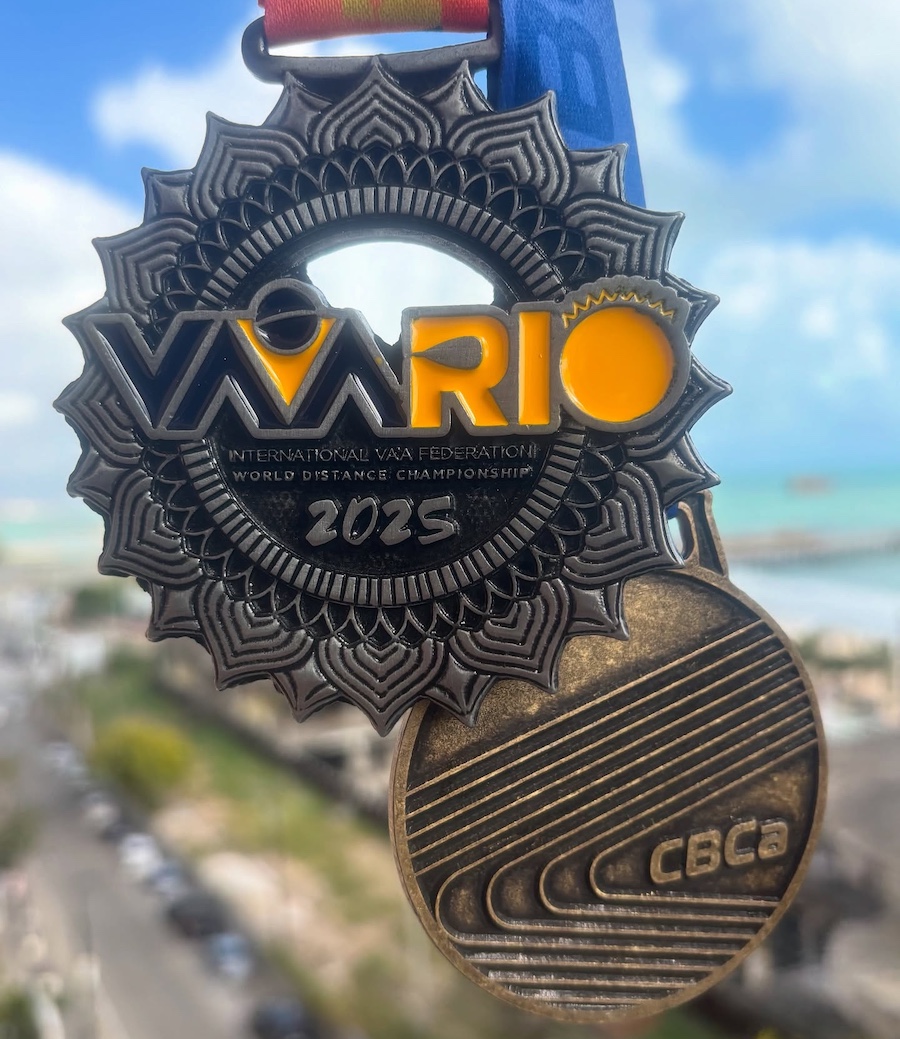
Spending time at Dos Reis Va’a was the best decision I made in my paddling career. Coach Paulão has a strong relationship with David Tepava, coach of Shell Va’a, and fully adopted the methods, philosophy, and technique that Coach Tepava uses at Shell, so it feels like I won the paddling technique lottery. Paulão also helped me reconnect with Carlos Chinês, another Brazilian paddling legend who led my Masters 50 crew to a silver medal at IVF Distance World Championships in Brazil last year.
I had to visit Hong Kong before the third anniversary of leaving in order to make sure I did not lose my residency, and during that visit I was offered the position of Head Paddle Sports Coach at the Royal Hong Kong Yacht Club. It is an amazing opportunity to be back and work doing what I love most in life at a club and city that you have to see to believe – I have one of the best paddling jobs in the world. Honestly, I hope people don’t believe it and come check it out during our Around the Island Race.
Over the years, you have trained and competed in different countries and oceans. Which places and conditions have marked you the most — whether because of their beauty, difficulty, or the lessons they taught you as an athlete?
I think Hawaii Kai will forever be special because of my whale encounter, but the places in Hawaii that I love are not the famous ones. Puna will always be my spiritual paddling home even if I have not been able to return for almost 10 years.
Fortaleza is the world’s best kept paddling secret that is not a secret. I don’t know of any other place in the world where a downwind is guaranteed every single day of the windy season. The only decision you need to make is whether you want your downwind session to be 30+ km or if you just want to do half of that distance. The water is warm, the food is good, the people are friendly, and the conditions are phenomenal!
And of course, my two homes of Ilhabela and Hong Kong.
You practice different disciplines within ocean paddling. In your view, how does one modality complement another? What do surfski, va’a, and OC6 each teach differently to a paddler?
I also practice dragon boat! Each discipline is unique, but they reinforce each other and make you train in ways that make you a better paddler. Surfski is all about balance and rhythm for me, finding the flow of the runs and staying with them. The ski will definitely show you if you have a habit of relying too much on your ama. Dragon boating is all about synchronicity and explosive power and that kind of fitness comes in handy when a bump requires an extra hard push. The V1 teaches you that the ocean is in charge; there is no use in fighting the water or trying to force something to happen. You have to be absolutely focused and use all your senses. The OC6 requires you to be as attuned to your crew as a dragon boater, and as attentive to the ocean as the other disciplines.
What I like about those modalities is that all of them, even the individual ones, require a focus on team and community. The best way to paddle well is to have and be good teammates, to support the people you train with even when you challenge them, even when you are fighting for a seat or for position at the finish line. If you can’t find joy and inspiration in the paddlers you are with, something has gone wrong.
Today, many athletes train only in familiar conditions and become used to a single type of ocean environment. What were the biggest adaptation challenges you faced while paddling in such different places around the world?
I am tropical through and through. I am always ready to get on the water no matter where the opportunity arises, but dealing with the cold is tough for me. Hello, Fortaleza, I love you!
The thing about challenges and different conditions is that you just need to learn to ask local paddlers for tips and advice, and to know your limits. I have never gone anywhere in the world where I asked a local paddler about the local conditions and that paddler did not spend a lot of time talking about conditions, dangers, and fun spots. Of course, you need to know your limits and gradually develop confidence, but one of the best things about paddle sports is being able to explore new places.
You said Hong Kong had a major impact on your life and your relationship with paddling. How does it feel to return now with more experience and a different perspective on both the sport and the ocean?
Hong Kong is where I learned to paddle and where I continue to learn to coach.
What I learned is that Va’a is a very competitive sport in Brazil and it attracts exceptional athletes, so the volume and intensity of training really opened my eyes. I was always interested in technique, so having Paulo dos Reis as my coach has been an amazing experience. He is a master waterman who has excelled in several modalities, and he really reinforced to me the importance of every single detail – nothing is too small or unimportant.
At the same time, Coach Paulão is very focused on teamwork and community, so the lessons I learned from Coach Afa continued to be reinforced. Dos Reis Va’a is home to paddlers who have excelled at every level of the sport, but it is as welcoming to people who just want to experience the ocean and keep active as it is to aspiring national and international champions. That balance has really changed my perspective. Now I find as much joy in coaching Yacht Club paddlers who just want to do something that does not involve a screen as I do helping some of the best outrigger paddlers in the country get faster.
Throughout your career, which titles, races, or achievements have had the most special meaning for you? Is there any race or crossing that you consider unforgettable?
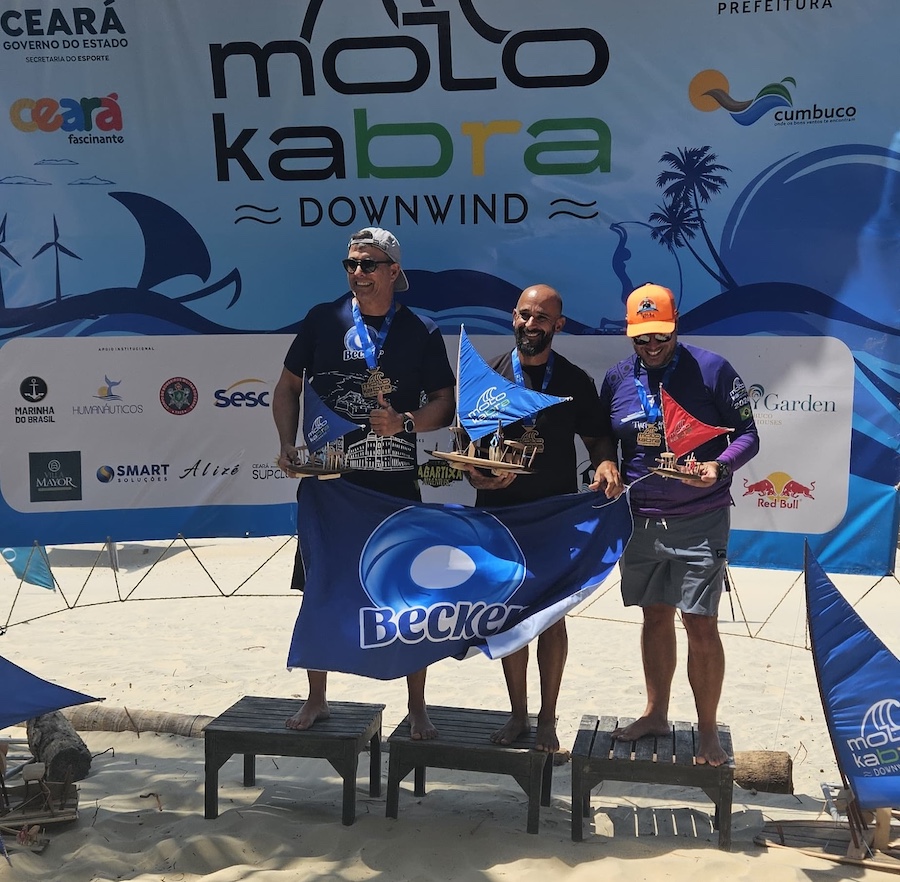
I don’t keep medals or trophies because I don’t like having to move a bunch of stuff around with me, but I kept three of them: my Molokai bronze medal, the silver from the last IVF Worlds, and a Jangada trophy from Molokabra. Getting a podium in my category at Molokai is unforgettable because the level is so high and it is such an iconic race. IVF Worlds was exceptional because it required so much work and sacrifice to drive 8 hours each way every time I had to train with my team, and to keep hammering at home between training sessions. I kept the Molokabra trophy because now that is the race I enjoy most, both because the conditions are so extraordinary and because I have made so many dear friends in Fortaleza.
You remain active, competitive, and constantly evolving in the sport after the age of 50. In your opinion, what are the keys to maintaining performance, motivation, and a strong connection with the ocean over so many years?
I paddle because I love it, and I love it because there is always something new to learn. What keeps me going is curiosity more than results. A few weeks ago I was paddling to the start of my coaching session at the Yacht Club and I figured something out about my catch and that has energized me for weeks. Paddling is what I do to nerd out, to meditate, to have something to talk about. It is really a lifestyle for me. It does not need to be that for everyone, of course, but if it stops being a source of joy to a paddler, something needs to change.
On the fitness side, I am learning to be kinder to myself. It would be nice to go and hammer as hard as I could in my early forties, but my body has changed and I can’t handle the same volume or intensity. I think that appreciating the fact that my body and mind are changing have kept me largely healthy and injury-free. I still push myself very hard, but I can’t deadlift as much or sprint as hard as I used to, and that is OK.
The ocean is changing all the time, I’m changing all the time. We’re in good terms.
As La Vila Joiosa prepares to welcome the world of Ocean Racing, few people are as closely connected to the town’s journey in the sport as Juan Gordero. An athlete, coach and long-time member of the local club, Juan has been part of its evolution over the years, as La Vila Joiosa established itself as […]
For Maria Clara, Molokabra isn’t just another stop on the calendar, it’s practically a homecoming. Now competing for her third consecutive year, the Brazilian paddler arrived in Ceará fresh off a rainy stretch in Ilhabela and stepped straight into the trade winds she’s come to know so well. Her opening descent delivered a personal-best top […]
Welcome to MolokaBRA Downwind 2026! Welcome to Ceará, Brazil, for the 8th edition of MolokaBRA Downwind — one of the biggest downwind events in Latin America and a major gathering for ocean paddling. Taking place from September 18 to 27, 2026, along the Ceará coastline, MolokaBRA brings together athletes from Brazil and around the world […]
There are places in the world where water sports fit naturally into the rhythm of daily life. Fortaleza, in the state of Ceará, in the North East of Brazil is one of those rare destinations. From the first morning on Beira Mar, it becomes obvious: here, the ocean isn’t a backdrop — it’s the beating […]
For paddlers, the ocean is both playground and training ground—but it is also a place where the impact of pollution becomes impossible to overlook. A plastic bag caught around an OC1 rudder was one such reminder for Hayden Jamie Li, a young paddler and student from Hong Kong. He was already used to picking up […]
With just a few weeks to go before the 2026 Va’a World Sprint Championships in Singapore, Tahitian Va’a coach Philippe Bernadino is entering the final stages of preparation with the national selection. After months of selection and training, the focus is now on fine-tuning the crews, building cohesion and making sure every paddler is ready […]
[English] The 2026 Brazilian Va’a Championship in Vitória, Espírito Santo, Brazil brings together the country’s top paddlers for a high-intensity weekend of V1, OC1, OC2, and V3 racing in one of Brazil’s most iconic coastal venues. The 2026 Brazilian Va’a Championship will be available to watch live or on replay, so fans can follow every […]
O cenário náutico nacional voltou seus olhos para a capital capixaba, Vitória (ES) — cidade conhecida por suas raias desafiadoras —, que nos dias 30 e 31 de maio sediou o Campeonato Brasileiro de Va’a Maratona 2026. Realizado sob a responsabilidade da CBVA’A (Confederação Brasileira de Va’a), a entidade máxima da modalidade no país, o […]
Nascida e criada em Niterói, a cidade fluminense que se consolidou como a capital e o principal polo de Va’a (o esporte milenar da canoa havaiana) no Brasil, Danielle Chevrand construiu uma trajetória pouco comum no universo das águas. Formada em jornalismo e com passagens marcantes por grandes redações esportivas e na gestão de comunicação […]