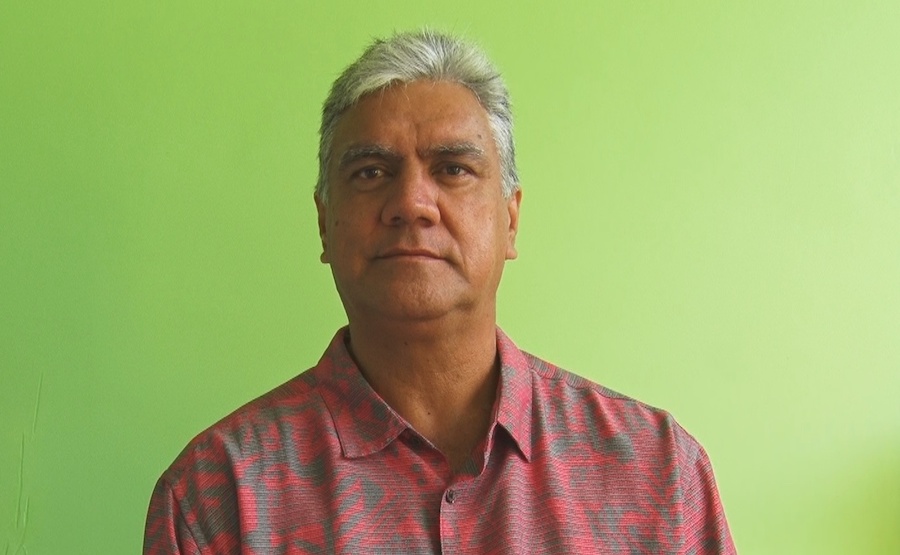
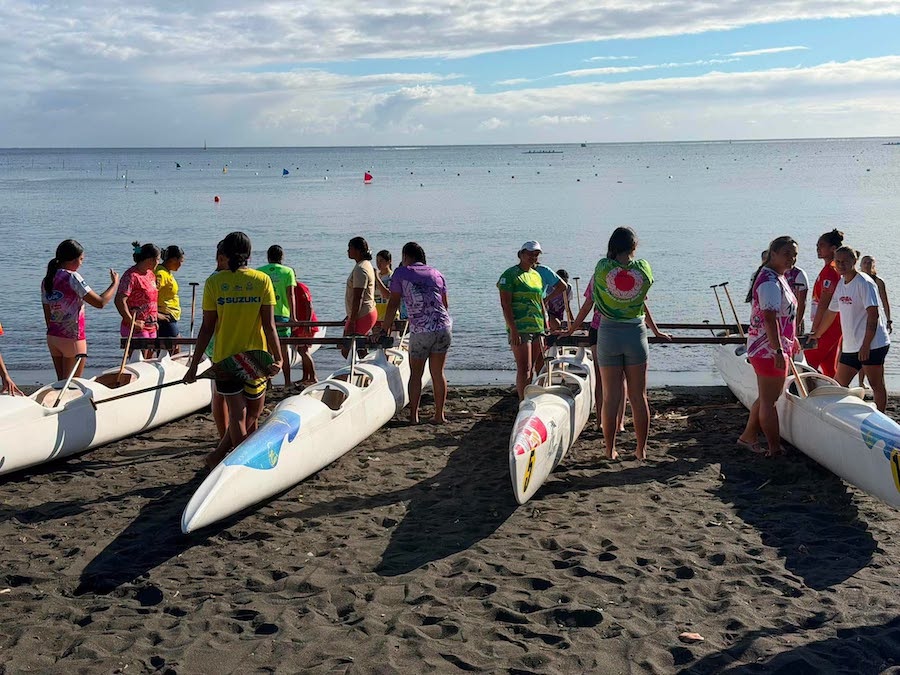
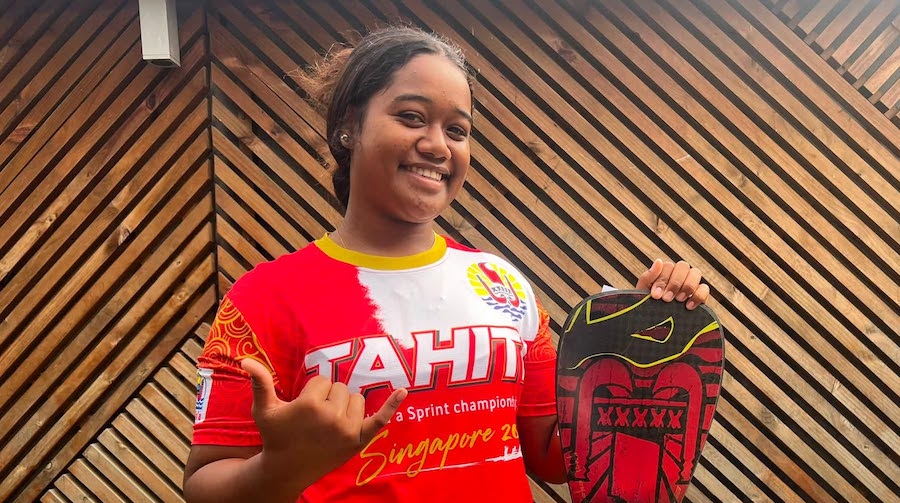
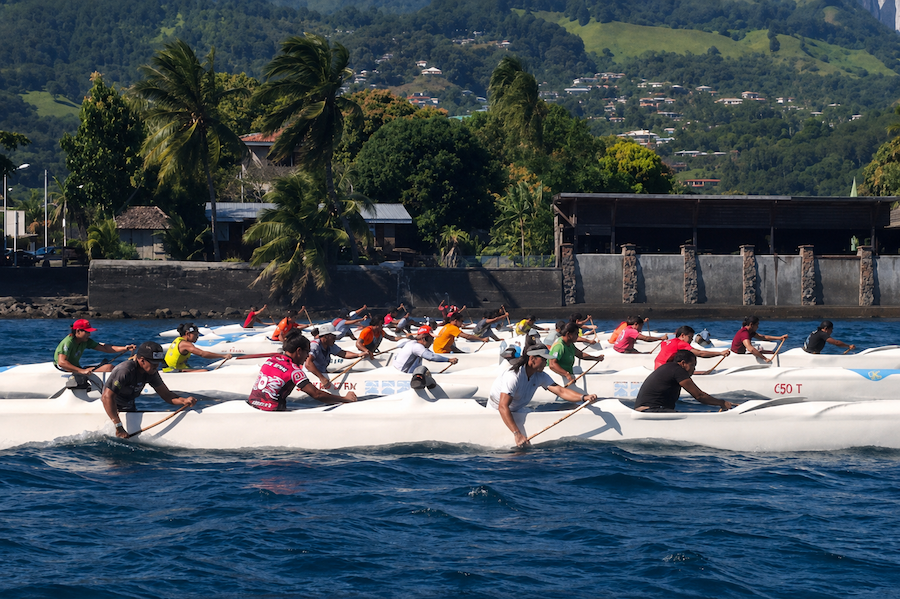
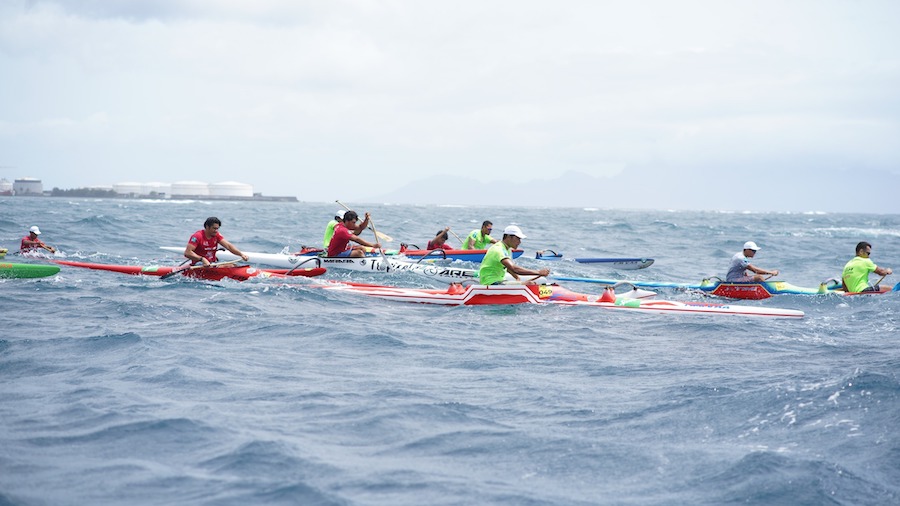
With the 2026 World Srint Championships in Singapore just weeks away, the Tahitian Va’a selection is entering the final stages of its preparation. During the team’s penultimate training session in Tahiti, we caught up with Gordon Barff, Technical Director of the Tahitian Va’a Federation, to discuss the selection process, the challenge of bringing together the country’s strongest individual paddlers, and the crucial role played by clubs in preparing the national team. After a record medal haul overseas in 2024, expectations will once again be high in Singapore. But behind the performances on the water lies a much larger collective effort.
Building on a record-breaking 2024
Tahiti will head to Singapore hoping to build on its success at the previous World Championships. “In 2024, we achieved our record number of gold medals abroad,” Gordon explains. “We’re going to try to achieve at least half of that, and hopefully the same again, to give the very best of ourselves.”
The preparation has been underway for several months. The process began with a pre-selection in January, followed by further selection stages in February and March, before the final selection was completed in April, ahead of the official registration with the international federation.
Two championships, two different approaches
One of the particularities of the World Sprint Championships is that there are two distinct competitions: the Elite Championship and the Club Championship.
For the club competition, the federation has allowed the clubs to build the crews they believe can perform best.
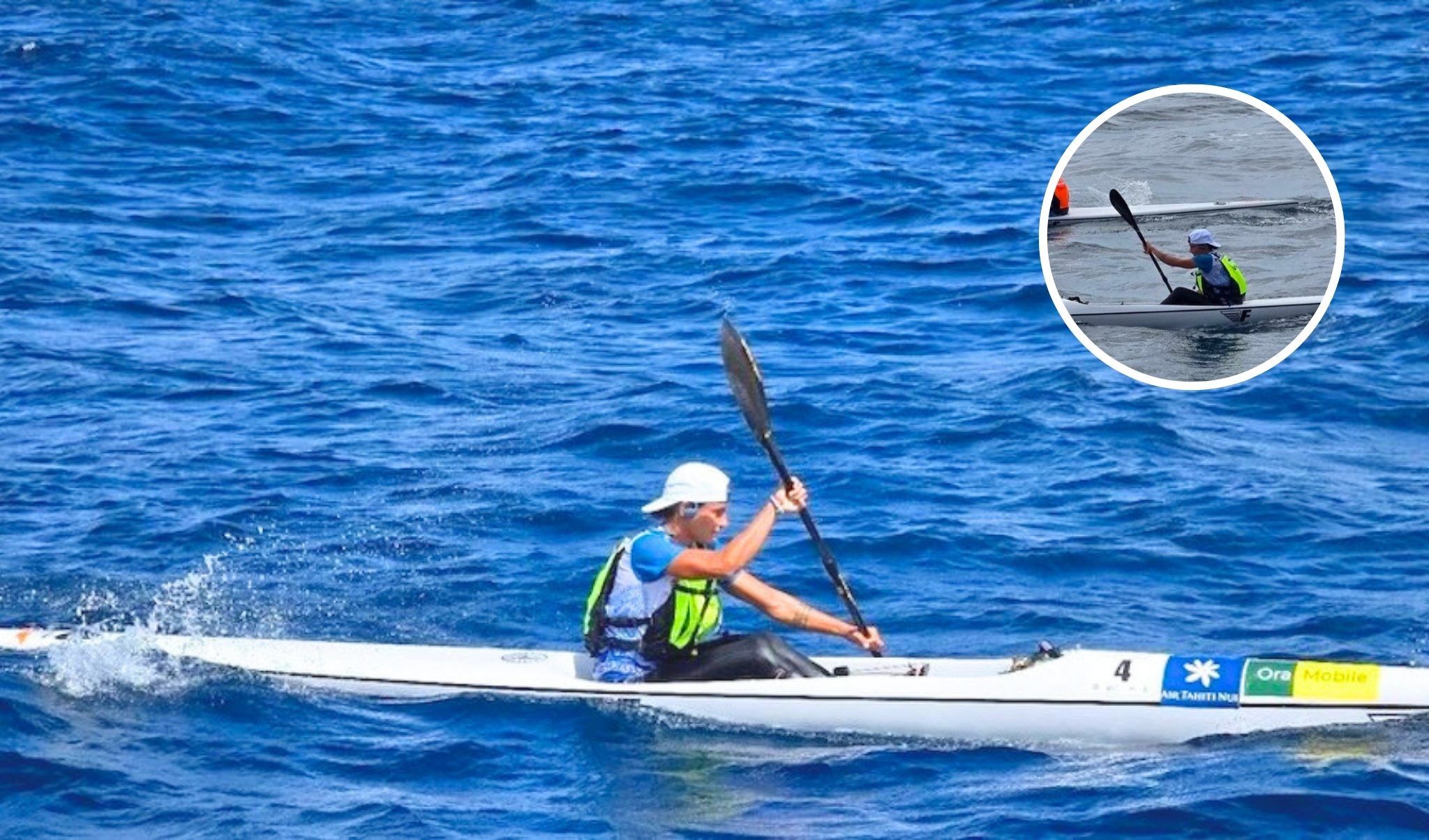
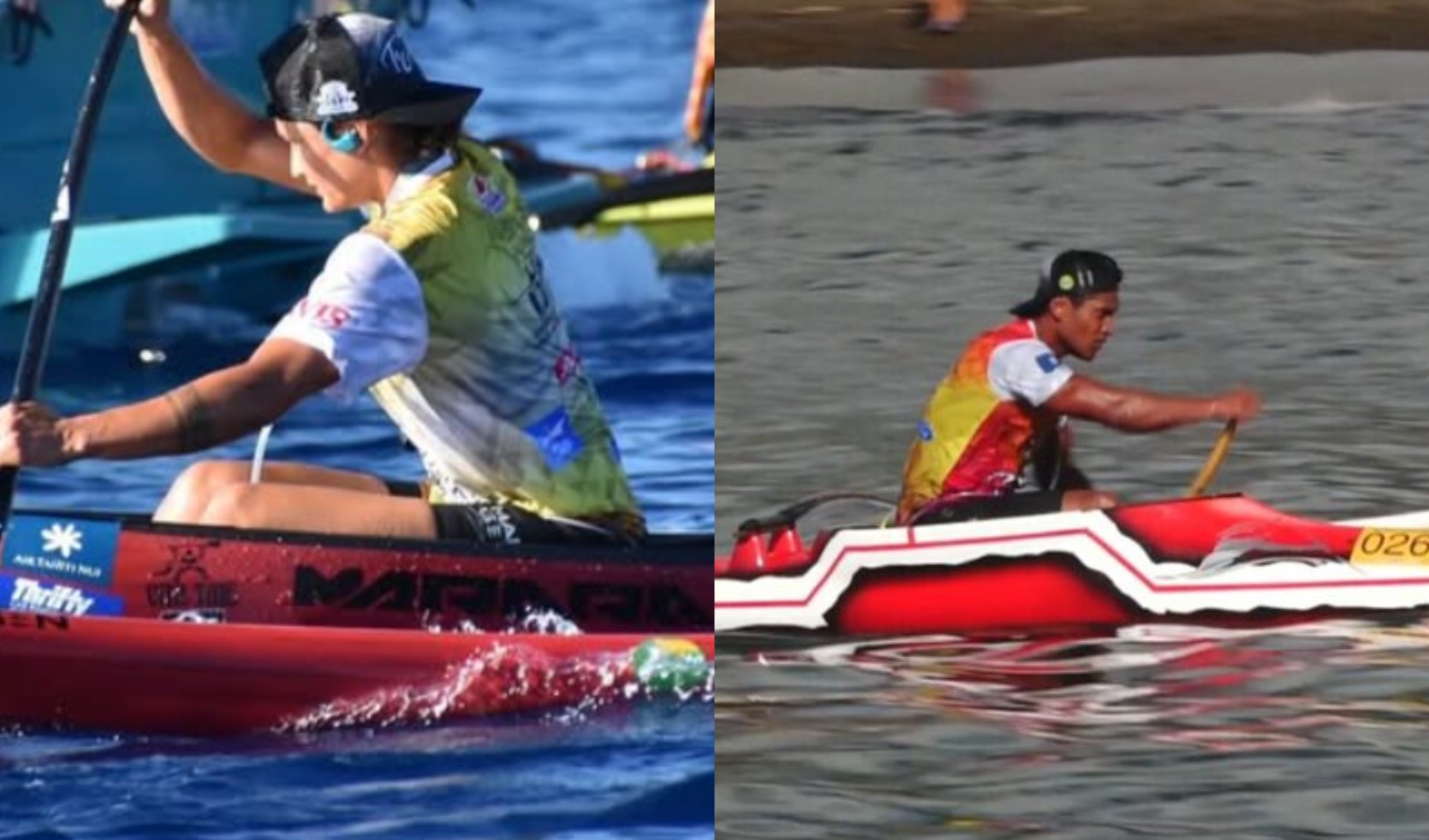
The elite selection follows a different approach. “This year, we really focused on the individual side,” Barff explains. But selecting the strongest individual paddlers is only part of the equation. Certain positions, particularly the steersmen, require specific experience and cannot simply be replaced. “You can’t invent them. If you have twelve of the best V1 paddlers but no steersmen, you have to make adjustments.”
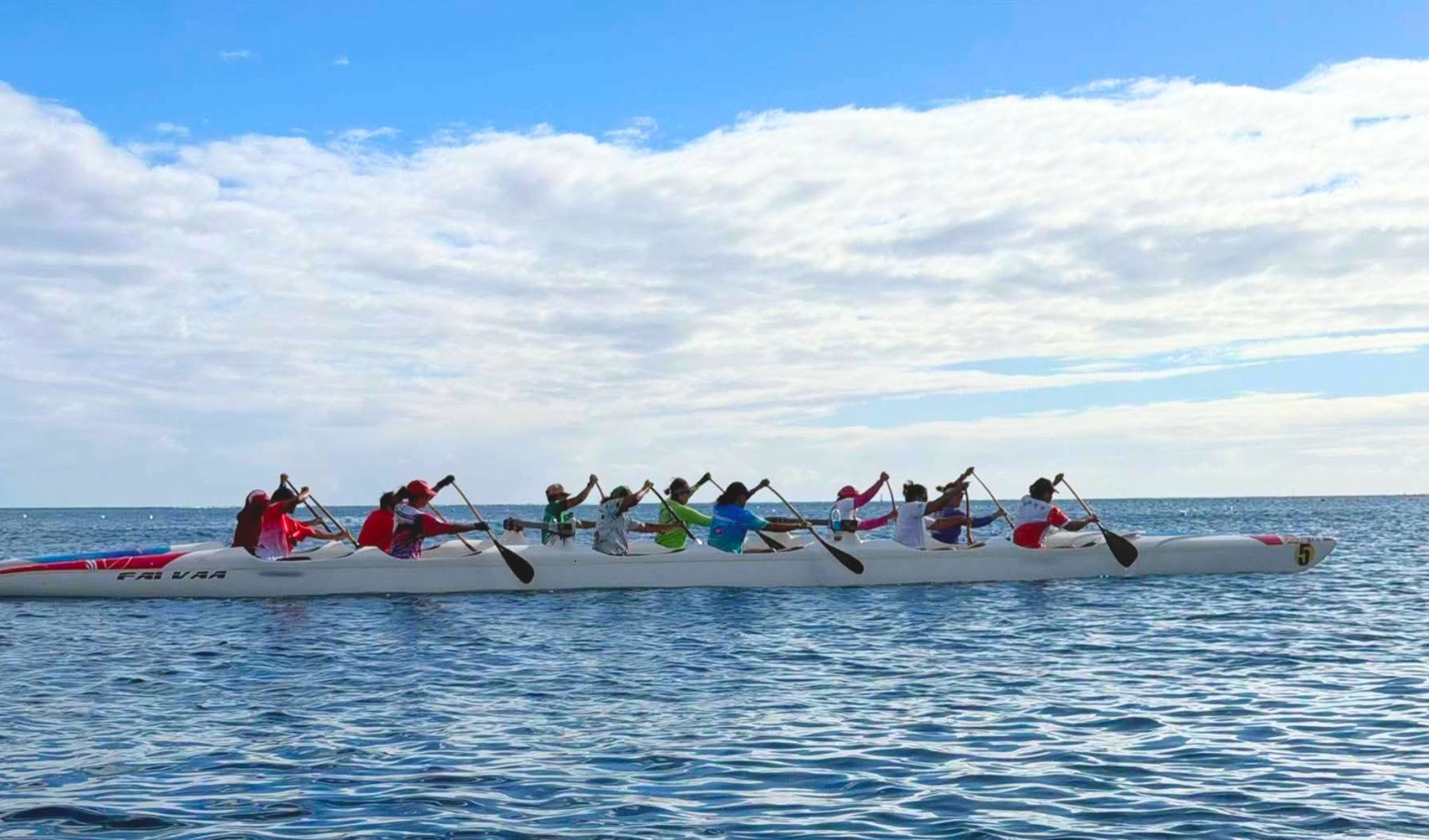
The challenge then becomes turning a collection of outstanding individuals into a functioning crew. “It’s like the French football team or the Spanish football team. When you bring together so many individual talents, it can be difficult to put everyone together.” That is where the coaching team becomes essential. Barff highlights the work of Philippe Bernardino, Nadine, Titini and the wider coaching team, who have the difficult task of bringing all these individual personalities together before Singapore. “Hopefully, by the time we get there in four weeks, it will produce something good.”
The reality behind the athletes
For Barff, one of the biggest challenges of preparing the national team is not necessarily what happens on the water. It is understanding the reality of the athletes who make up the selection.
“The most difficult part is really trying to provide as much support as possible, first to the coaches and athletes, but especially to the clubs that entrust us with their champions.” Because despite the level of performance expected from the Tahitian selection, most of these paddlers are not full-time professionals. “Everyone says we are professionals. That’s not true. We are all workers.” Some athletes combine elite-level Va’a with demanding jobs. Barff gives the example of paddlers who have been working on construction sites until four in the morning before continuing with their sporting commitments.
That reality makes the role of the federation and clubs even more important. “We have to find a way to support these clubs and tell them: bring us your athletes, and we will support you.”
A team effort beyond the water
For Barff, supporting the Tahitian selection means working across the entire structure of the sport. His role involves supporting the athletes, the coaches and, crucially, the clubs that make their participation possible. He also highlights the work of the federation’s board and its president, Rodolphe Poirier, whose commitment he describes as exceptional. The Tahitian delegation is scheduled to leave for Singapore on August 14, arriving on August 15, with the return planned for August 30. The team will therefore spend more than two weeks in Singapore. By then, the months of selection, training and organisation will have led to one final objective: arriving ready to race.
The challenge is not simply to gather the fastest paddlers in Tahiti. It is to build crews capable of working together, support the clubs and athletes behind them, and make sure that a team of paddlers who are also workers can perform at the highest level on the international stage. Tahiti will once again be one of the teams to watch in Singapore. And while the medals will ultimately be won on the water, the foundations of the campaign have been built long before race day, through the athletes, coaches, clubs, federation and families working together behind the scenes.
Depuis près de quarante ans, le nom de Te Aito résonne comme une évidence dans l’univers de la pirogue. Née en 1988, la course s’est peu à peu imposée comme l’un des rendez-vous les plus attendus du va’a mondial, forgeant au fil des éditions certains des plus grands champions de la discipline. Et l’actualité du […]
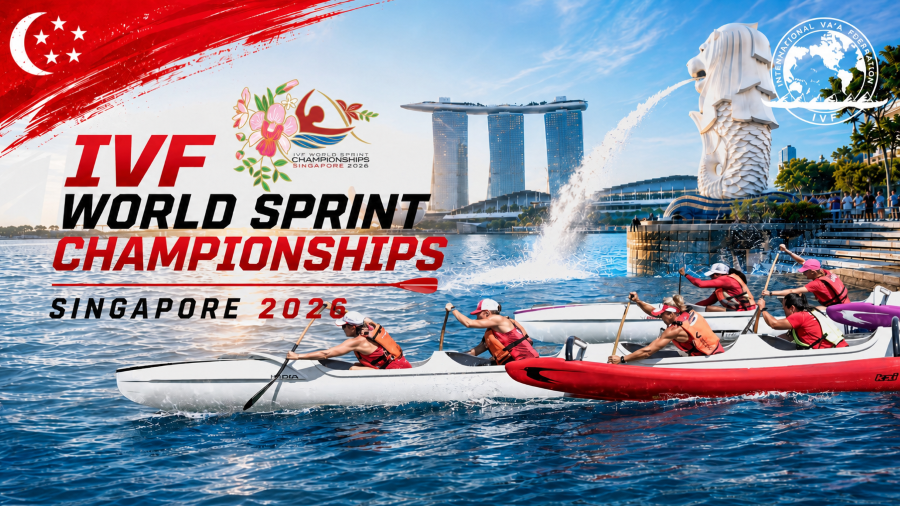
The world’s biggest Va’a sprint showdown is about to begin! From August 17 to 31, Marina Bay in Singapore will welcome 2,222 athletes from 29 countries and territories for one of the biggest celebrations of Va’a racing in the world. Expect spectacular sprint racing, explosive speed, precision and fierce competition, alongside the Polynesian traditions and […]
Based in Singapore and born from a genuine passion for paddling, SKILD is building a name for itself with technical apparel designed specifically for life on the water. At the heart of the brand is co-founder Christoph Renger, an active Dragon boat, OC and Va’a paddler who understands first-hand the demands of long hours in […]
À 54 ans, Christophe Havy poursuit une aventure commencée il y a plus de quinze ans, lorsqu’il a découvert le Va’a à Marseille. Adhérent du club Marseille Manu Ura 13, le rameur français vient d’arriver à Singapour pour disputer les Championnats du monde IVF de sprint Va’a 2026. Une nouvelle étape importante dans un parcours […]
Iloha Eychenne claimed an impressive victory in the women’s race at stop #2 of the ICF Canoe Ocean Racing World CUP Tahiti, finishing well ahead of the rest of the field after 23 kilometres of open ocean and lagoon paddling. But for the waterwoman, 3 x Va’a World Champion among other accolades, the result represented […]
With just a few weeks to go before the 2026 Va’a World Sprint Championships in Singapore, Tahitian Va’a coach Philippe Bernadino is entering the final stages of preparation with the national selection. After months of selection and training, the focus is now on fine-tuning the crews, building cohesion and making sure every paddler is ready […]
Parties de Toulon avec plusieurs mois de préparation dans les bras et un rêve en tête, elles ont traversé près de 18 000 kilomètres pour rejoindre Tahiti. L’aventure polynésienne des rameuses de Toulon Va’a Vahinés a commencé bien avant leur embarquement pour Tahiti. En mai 2025, l’équipage toulonnais s’est illustré en remportant la Vendée Va’a, […]
The 38th edition of Te Aito, the oldest race on the Tahitian Va’a Federation calendar, took place on June 5 and 6 in Taaone, Pirae, bringing together more than 1000 paddlers across all age groups, from young beginners to elite and veteran competitors. Throughout the weekend, Tahiti’s best paddlers battled for victory in one of […]
The countdown is over. This weekend, June 5-6, 2026, more than 1,000 paddlers will gather on the waters of Taaone, Tahiti, for the 38th edition of Te Aito, the oldest and most iconic V1 canoe race in French Polynesia. For nearly four decades, Te Aito has been more than just a competition. It has become […]