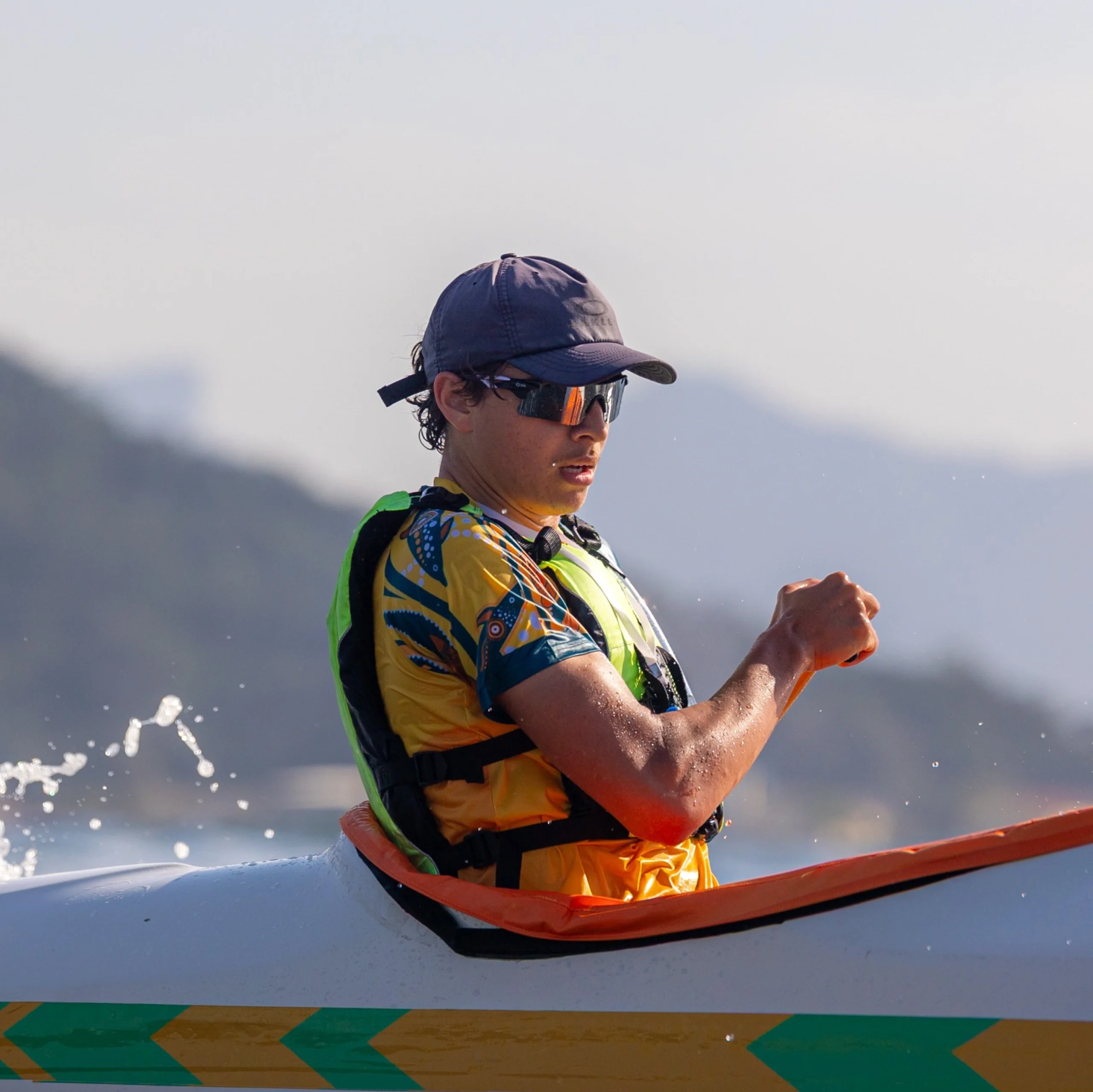
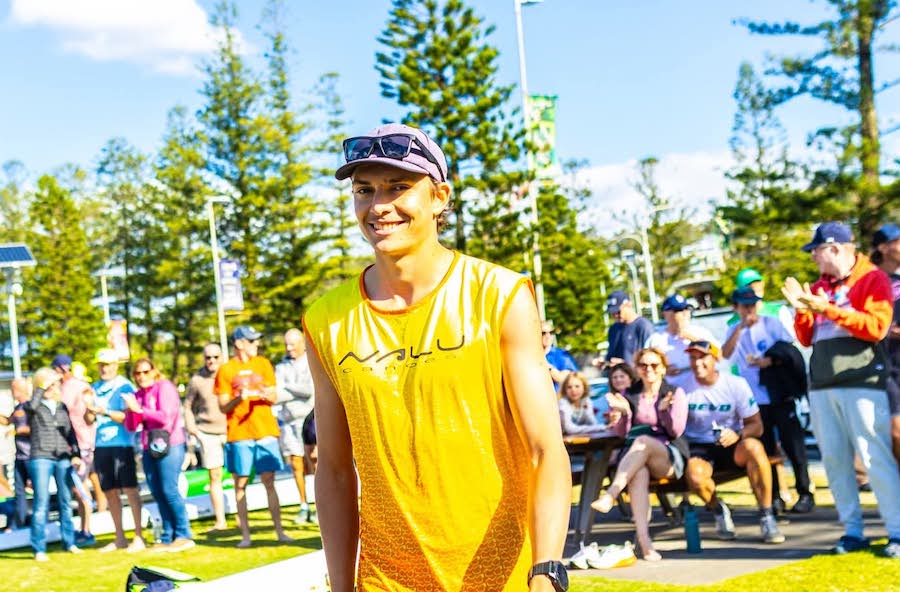
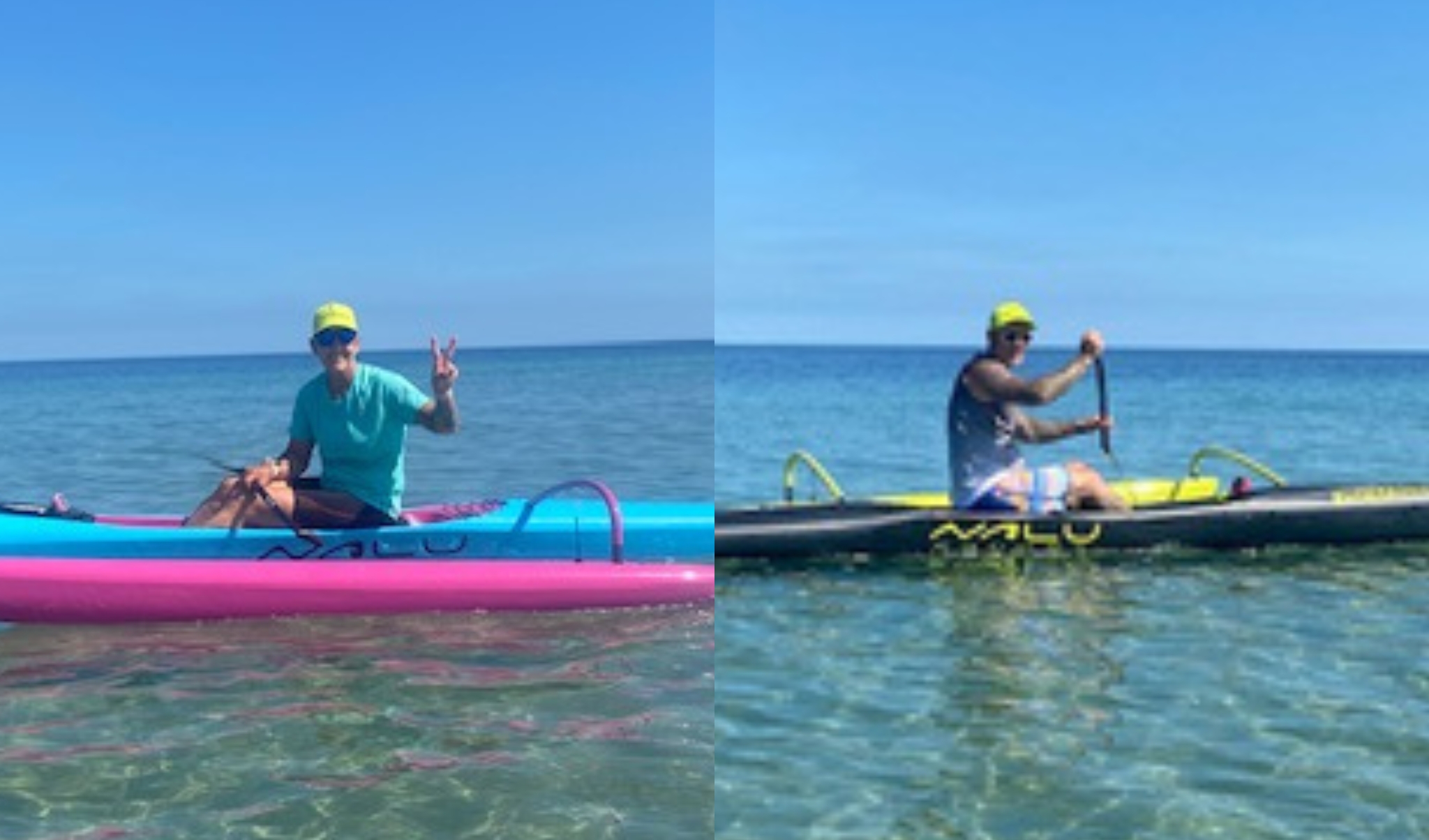
Merlin Grellier-Besancon is one of the rising young names in the world of outrigger canoe racing, a demanding ocean sport that combines endurance, power, technique, and the ability to read ever-changing conditions at sea. Competing across disciplines such as OC1, OC6, and V1, he has quickly built a reputation as one of the most promising athletes of his generation. Already a national champion, World Sprint bronze medallist for Australia, and multiple winner against senior Open fields while still in the junior ranks, Merlin’s rise has been rapid and impressive.
Originally shaped by the waters of Coffs Harbour, Australia, and now training in Tahiti, he continues to develop among some of the best paddlers in the world. He is also a proud Nalu Canoes rider, racing on the high-performance Nalu Supernova, a canoe built for speed, responsiveness, and elite ocean racing. We spoke with Merlin about his journey so far, his connection to the ocean, the mindset behind his success, and the goals driving his next chapter.
Hi Merlin, can you tell us about your background and how you first discovered ocean paddling?
I’ve always come from an active background. Growing up, I was involved in swimming squads, surf lifesaving, tennis, surfing, bodyboarding, and bodysurfing. Sport and the ocean were always a huge part of my life.
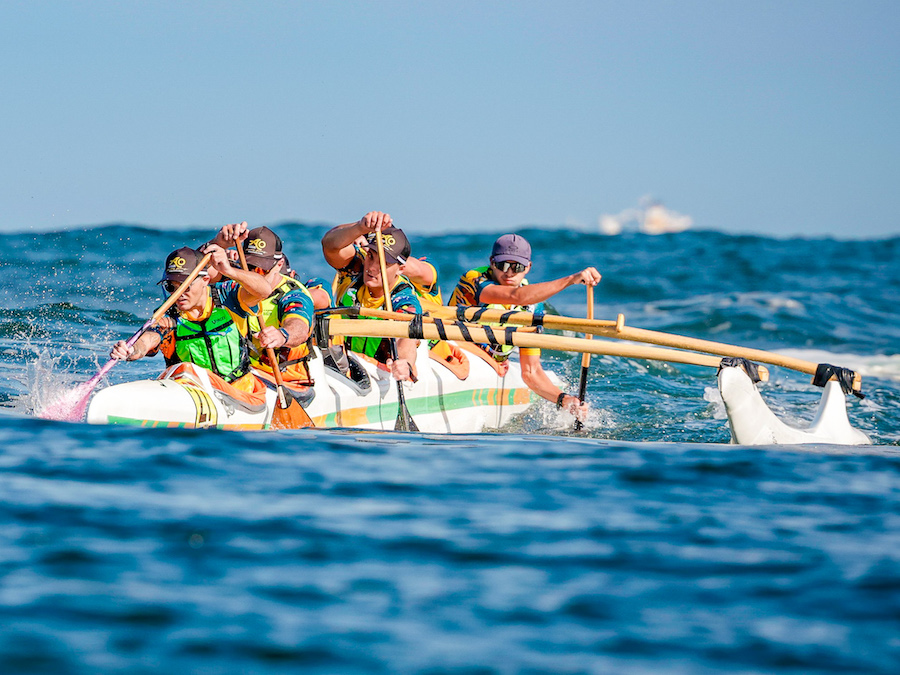
I first discovered outrigger paddling when I saw a V6 on the water in my hometown of Coffs Harbour. I was immediately curious, so I contacted the Coffs Coast Outrigger Canoe Club and had my first experience on the water. At the time, I was the youngest member by around twenty years. I was only 14 years old when I started.
I still remember that first session clearly. I was put straight into seat five and told to stay in time with the paddler in front of me. Seeing Coffs Harbour from the water gave me a completely new perspective, and spotting a turtle made the experience unforgettable. I was hooked straight away. What drew me in most was the connection to the ocean, something I had already developed through surfing and other water sports.
Can you tell us why you speak French and whether you’ve always lived in Australia or grew up somewhere else?
I was born in France, but I left when I was around one year old. My family then moved to the UK for a couple of years before relocating to Melbourne, Australia. After that, we spent three years in Malaysia, where I attended an international French school. I learned most of my French at home with my parents, and school helped reinforce it. Later, we returned to Australia and eventually settled in Coffs Harbour, where I grew up for most of my life.
Do you have any favorite spots in Australia for paddling, surfing, or running?
My favourite place to paddle will always be where I first learned: Coffs Harbour. It’s not only about the conditions or scenery, but also the people I’ve shared the water with there. Another place I really love is Mooloolaba, where you can get great downwind runs and huge waves in the bay. Last year, I caught one wave there that lasted one minute and fifteen seconds. That’s hard to forget.
Your journey has progressed quickly. How would you describe your development season by season?
2021: The Foundation
My first year was about learning. I trained once a week while still balancing swimming, tennis, and surfing. I was the only junior in the club, so I trained with adults from the beginning. Instead of seeing that as intimidating, I used it as motivation to rise to that level. That season gave me the technical foundations and passion that would shape everything after.
2022: First National Success
This was the year I committed seriously to paddling. I stepped away from swimming and tennis and increased training to three sessions a week.
At Nationals in Shoal Bay, I won:
Gold – OC6 Novice Mixed Short Course
Silver – OC6 Open Men’s Short Course
Later that year, my parents and I bought my first OC1, a second-hand Kahe Kai. It was the beginning of solo paddling for me.
2023: Raising Standards
Training increased to six or seven sessions a week, combining OC1, OC6, strength work, and ocean skills. I also began learning to steer OC6 crews, which requires strategy and precision. By the end of the season, I had earned the opportunity to steer at Nationals and qualified for the World Sprints.
2024: Breakthrough Year
This was my first full OC1 racing season.
At Nationals, I won the short course by two minutes and became the first OC1 across the line. Later, I represented Australia at the IVF Va’a World Sprint Championships in Hilo, Hawaii, where our U19 V6 crew won:
Bronze – 1000m
5th Place – 500m
While in Hawaii, I became increasingly drawn to the V1 discipline. When I came home, I decided to pursue it seriously.
2025: Major Progression
This was my final junior season, and I wanted to go all in. I moved to Mooloolaba, began studying mechanical engineering, joined the High Performance Student Athlete program, and immersed myself fully in training.
Some key moments included:
Winning the Brazil qualification time trial overall in V1 by 1 minute 32 seconds
Winning the Australian Nationals U19 V1 title while finishing first overall
Winning multiple Open Men crew races
2nd overall at Battle of the Bay
Racing Te Aito in Tahiti
Representing Australia at the World Distance Championships in Brazil
It was a season that showed I could compete beyond junior level.
2026: Tahiti Chapter
This year, I made the decision to move to Tahiti for a full year. I wanted to immerse myself in the sport, train with the best paddlers in the world, and learn from a culture where paddling is deeply rooted. I’m also incredibly grateful to EDT Va’a for welcoming me and supporting my progression since arriving. Every session here is an opportunity to grow.
Ocean racing requires a mix of technique, strength, and reading the water. Which skill do you think is the most difficult to master and why?
Reading the water is definitely the hardest skill to master. Technique and strength can be developed in a controlled environment, but the ocean is always changing. Learning to anticipate swells, connect runs, and position yourself efficiently takes years of experience. It’s not something you can rush. You develop it through repetition, mistakes, and time on the water. I’ve been lucky growing up in Coffs Harbour because we get a wide range of conditions, from flat water to proper downwind runs. That variety helped accelerate my learning.
What aspects of your training have helped you improve the most in recent years?
Consistency has been the biggest factor. Regular time on the water combined with structured training helped build fitness and confidence. I’ve also made a conscious effort to push myself during high-intensity sessions, especially when things become uncomfortable. That transfers directly into racing. The High Performance Student Athlete program at university also helped a lot. It gave me access to gym structure, coaching, and recovery support. Today, my training is more intentional. I focus on quality over quantity and make sure every session has a clear purpose.
What are the key characteristics you appreciate in your Nalu canoe during races?
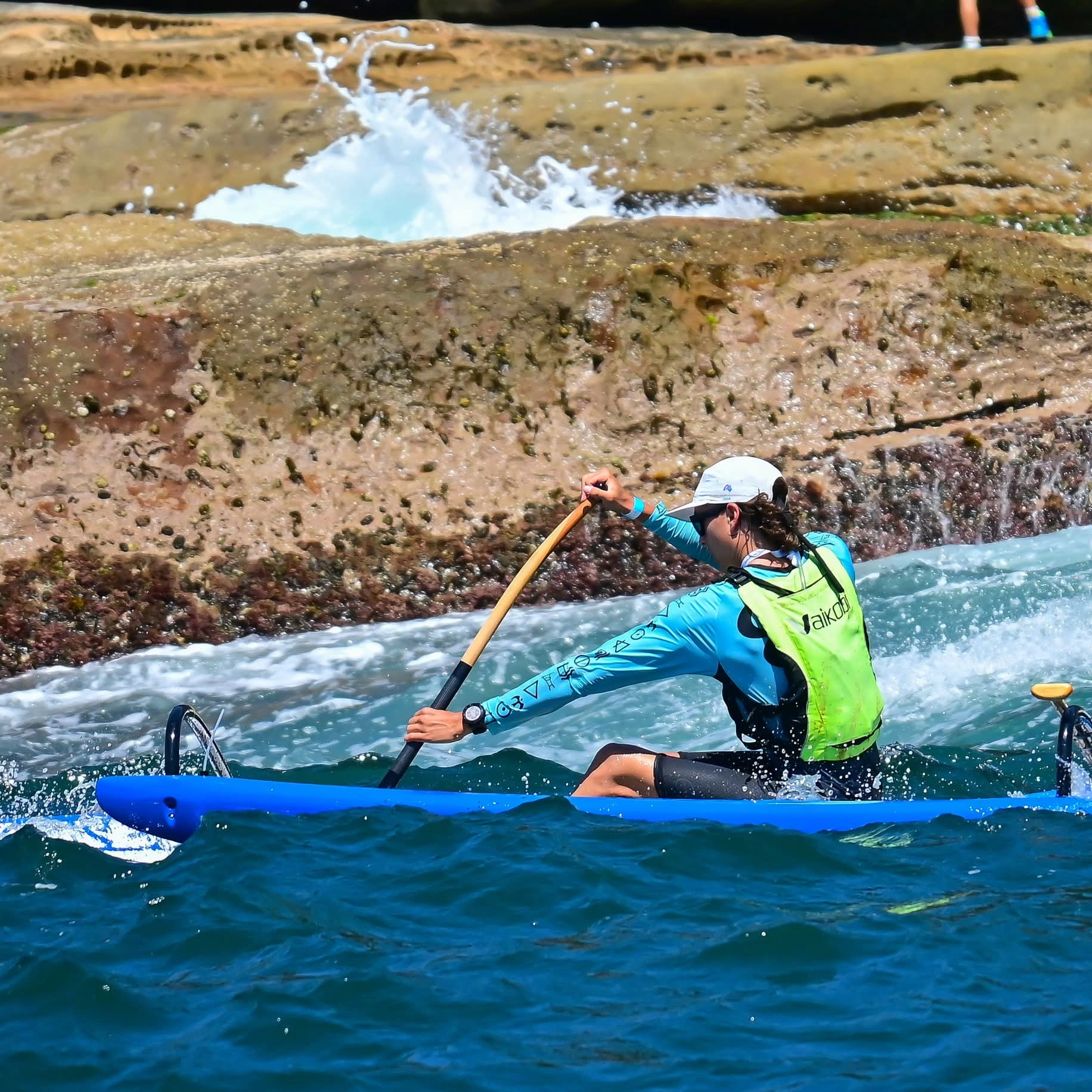
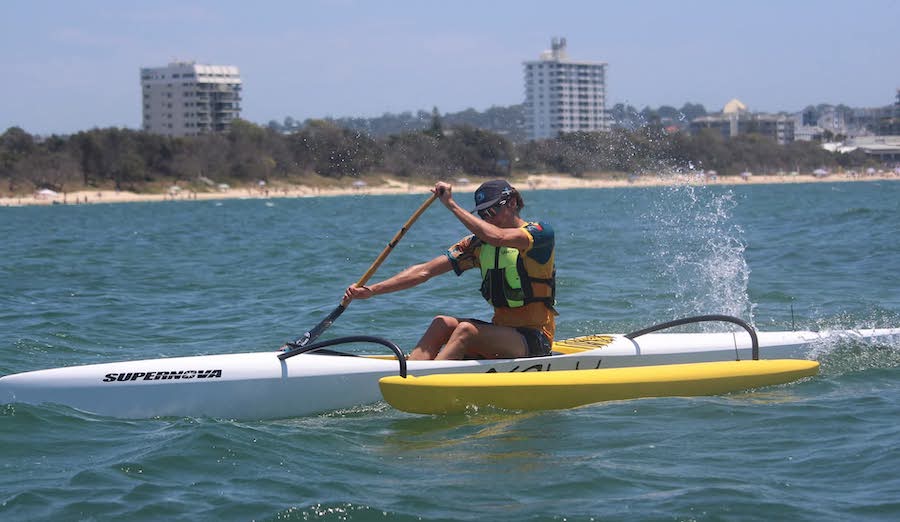
My current canoe is the Nalu Supernova. Before this, I paddled a Puakea Kahe Kai, which was a great canoe but not ideally suited to my size. The Supernova is designed for lighter paddlers, with:
Less volume
Shorter length
Narrower hull
That reduces drag and makes it much faster and more responsive on the water. Acceleration is noticeably quicker, which is a huge advantage when catching runs or reacting in changing conditions. I also really appreciate the cockpit ergonomics and the integrated wave deflector, which helps keep the canoe dry and stable. Overall, it feels perfectly matched to my size and paddling style.
What are your main goals for the upcoming racing seasons?
My main goal is to compete for the Australian Nationals title. This year is especially meaningful because Nationals will be held in Coffs Harbour for the first time in thirteen years. Racing such a major event in my hometown means a lot. While I’m in Tahiti, I also want to race as much as possible and gain experience at the highest level. Events like Te Aito and Hawaiki Nui Va’a are major goals, not only because of the competition, but because of what they represent culturally. This is also my first season in the Open category, so the focus is progression, physically, mentally, and technically.
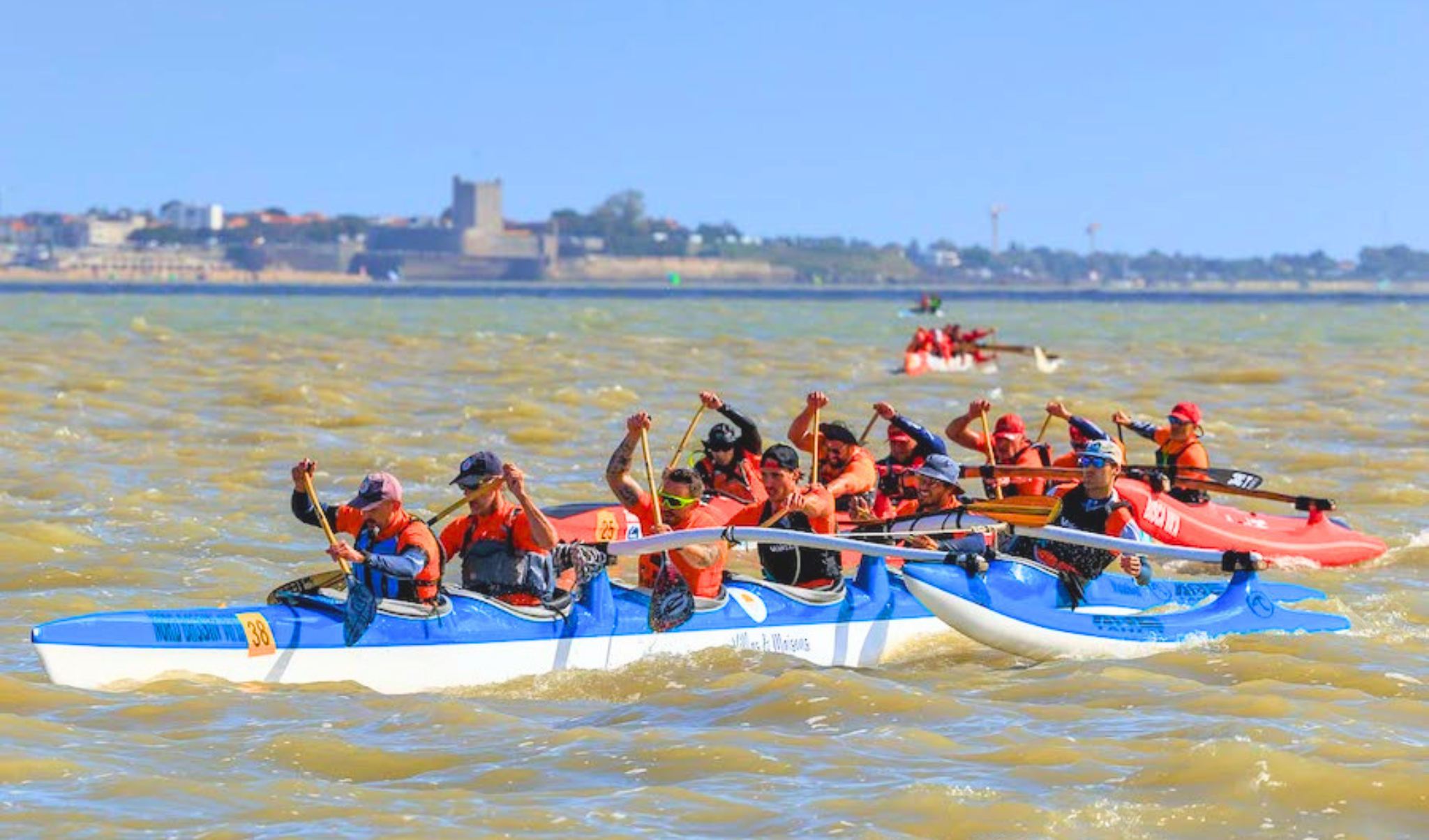
Alors que le Fort Boyard Challenge devait une nouvelle fois réunir les passionnés de glisse et de Va’a à Fouras, l’édition 2026 a finalement dû être annulée. Pourtant, pas question pour Rochefort Océan Va’a de laisser ce rendez-vous disparaître du calendrier. Face à cette situation, le club a choisi de relever un nouveau défi : […]
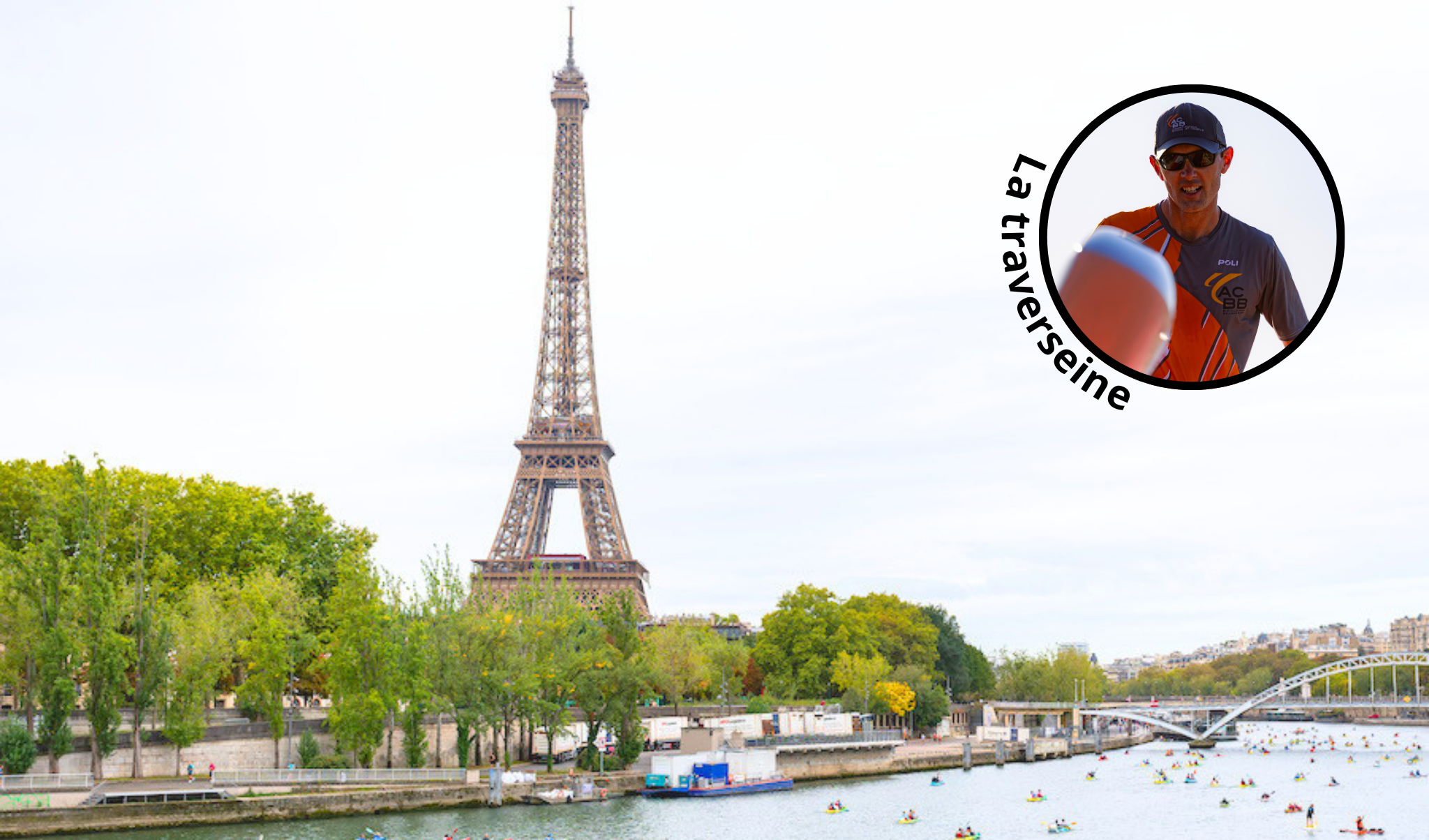
Chaque année, la Seine devient le terrain de jeu de centaines de passionnés de sports de pagaie à l’occasion de La TraverSeine. Au cœur de Paris, kayaks, canoës, SUP et pirogues se retrouvent pour une traversée unique, offrant un autre regard sur la capitale et sur un fleuve qui a longtemps été associé à d’autres […]
Two years after the Azores, Europe’s best ocean paddlers return to battle this time on the Finistere coast in France for the continental crowns. The 2024 championships saw France’s Hector Henot claim his first European Open title, while Spain’s Judit Vergès Xifra secured her third. European titles will also be awarded across Junior, U23 and […]
From discovering paddling at the age of 14 in Brest to competing on the international circuit, becoming a mother, and eventually returning to racing, Angie Leroux’s journey has always been closely connected to the ocean. Now, 22 years after first stepping into a kayak in Brest, she is preparing to compete at the European Championships […]
Based in Singapore and born from a genuine passion for paddling, SKILD is building a name for itself with technical apparel designed specifically for life on the water. At the heart of the brand is co-founder Christoph Renger, an active Dragon boat, OC and Va’a paddler who understands first-hand the demands of long hours in […]
Du 26 au 30 août prochains, Brest accueillera les Championnats d’Europe d’Ocean Racing, un rendez-vous majeur qui réunira les meilleurs spécialistes européens de surfski, mais aussi de pirogue océanique en OC1, OC2 et V6. Organisé par le Canoë Kayak Club Brestois (CKCB), l’événement ambitionne de faire rayonner toutes les facettes de cette discipline spectaculaire, tout […]
At just 18 years old, Louka Brard has already established himself as one of the brightest young talents in French Ocean Racing. The Breton paddler delivered an outstanding performance at the 2026 French Championships, claiming four national titles and one bronze medal across five different disciplines. A passionate waterman and first-year sports science student in […]
The German Open Ocean Championship, held during the Hawaiian Sports Festival, brought together some of Germany’s top outrigger canoe paddlers for a demanding day on the water. While many expected classic downwind conditions, Mother Nature had other plans. Instead of strong winds and ocean runners, the athletes faced intense heat, flat water, and a race […]
For more than 25 years, Jeff Holubeshen, a Nalu Canoes athlete, has been moving across water with the same quiet obsession: finding efficiency in every stroke. Based in Toronto, his journey has taken him through almost every form of paddle sport: dragon boat, sprint canoe, outrigger canoe, and stand-up paddle. Each one adding another layer […]