Born in Budapest, Hungary, far from the world’s great ocean channels, Beata Markin began her paddling journey in sprint kayaking at just ten years old. What started on flatwater evolved into a career defined by open-ocean racing, resilience, and constant progression. Now based in Honolulu, Hawaiʻi, she competes at a high level across multiple disciplines from surfski to OC1 and OC6, blending European kayak precision with the deep traditions of Hawaiian outrigger culture. A team rider for Kamanu Composites and a member of Team Bradley, Beata is driven not only by performance, but by challenge, growth, and purpose. We sat down with her to talk about her journey, her goals, and what continues to push her forward in the ocean.
For readers who may not know you yet, could you introduce yourself and tell us a little about who you are, both as an athlete and as a person?
My name is Beata Markin. I live in Honolulu, Hawaiʻi, and I was born in Budapest, Hungary. I’m a fitness professional specializing in post-rehab and special conditions. I am a team rider for Kamanu Composites, and I also paddle with Team Bradley.
Can you walk us through your sporting background? How did you first get into paddling, and what led you to compete in ocean racing and surfski at a high level?
I started sprint kayaking (K1) at just 10 years old in Hungary. After moving to the United States, I continued sprint kayaking, but around 2009 I was introduced to surfski paddling.
Because of my strong K1 background, I quickly found success, which led to being picked up by a surfski manufacturer and gave me the opportunity to travel and race at some of the biggest events in the world, including the ICF Surfski World Championships in Portugal and Tahiti.
After moving to Hawaiʻi, I was introduced to outrigger canoeing first OC6, then OC1, and very recently V1.
I’ve been very competitive since I was young, having two older brothers definitely played a role in that. More than anything, I enjoy the challenge, the training process, and pushing my limits in each craft.
Looking back on your career so far, what has been your most memorable moment in paddling and why did it stand out?
I had a very strong 2025 season. If I had to choose a highlight for OC1, it would be The Mox and Dragon Run in Hong Kong. It was my first time racing OC1 in Asia, and beyond being an exceptionally well-run event, it was an incredible experience overall.
For OC6, the standout race was Na Wahine O Ke Kai with Team Bradley, racing in a koa canoe “Momi” (“pearl”), built by Sonny Bradley.
Koa canoes are rare, built from once-living koa trees, and are powerful symbols of Hawaiian culture and history. Racing Momi across the Kaiwi Channel was truly a special and meaningful experience one that not everyone gets the opportunity to have.
You’ve raced in some of the toughest open-ocean events. How different is your preparation for a race like Na Wahine O Ke Kai compared to a solo challenge? What changes mentally when you’re racing as part of a crew versus being completely on your own in the channel?
Each has its own unique challenges, but preparation for a solo channel race is more demanding for me. It requires long hours and high mileage, and you are solely responsible for every decision you make, choosing your line based on wind, currents, and tides, adapting to changing conditions, and minimizing mistakes.
Having a strong escort team is also crucial, since you are alone in the channel.
I’m very fortunate to do Molokaʻi to Oʻahu practice runs, which allow me to study the channel, observe how conditions change, and better understand that it is never the same twice.
Being part of a team, on the other hand, means trust, synchronization, and collective effort. Preparing for Na Wahine is about fine-tuning the system, practicing fast water changes, synchronizing power application and release, and finding the strongest crew combination.
Every paddler has a role, and everyone must execute their job well. Racing with five other women gives you confidence, shared strength, and unity. You’re not alone you rely on each other, support each other, and paddle for something bigger than yourself.
Elite paddling demands a lot physically and mentally. How do you balance intense training, travel, and your personal life?
Training, racing, and traveling can place significant strain on both your body and relationships. As I’ve gotten older, I’ve learned that recovery is not optional, it’s essential.
Along with mobility work, stretching, sauna, cold plunges, proper sleep, and nutrient-dense fueling, I prioritize taking care of my body.
Mentally, I believe mental health is just as important, if not more important than physical health. Having a strong support system makes a huge difference. I’ve also started working with a psychologist, which has helped me bring more balance into my life and improve my overall well-being.
Gear plays a crucial role in ocean performance. What equipment are you currently using, and are there any specific adjustments that make a real difference for you in big conditions?
I paddle a Noio from Kamanu Composites, an incredibly well-designed canoe for big ocean conditions, offering great glide and speed on the flat.
The only modification I’ve made is adding custom foot braces, since coming from kayaking, I rely heavily on leg drive.
I also use a Makana Aliʻi paddle, which I absolutely love. Both Makana Aliʻi Paddles and Kamanu Composites are locally owned and operated on Oʻahu. Representing local companies is important to me, and I’m proud to support them.
Hawai‘i is iconic for ocean paddling, but are there other places in the world where you especially love to train or race?
We’re definitely spoiled with amazing waters here, but there are many places I’d love to race.
Tahiti is high on my list. Even though I’ve raced surfski Worlds and OC6 at Hawaiki Nui Vaʻa, it’s the breeding ground for V1 paddling, and since V1 is still relatively new to me, I would love to learn from the best there.
New Zealand is also on my radar, I’ve heard incredible things about both the landscape and the racing scene.
I’m also very interested in racing more in Asia, especially Japan and Singapore, where paddle sports are rapidly growing and gaining strong support.
What goals are you currently working toward both in competition and outside of racing?
My main goal this year is Paʻa Molokaʻi Solo. I’m also aiming to qualify for the IVF World Sprints, and if that happens, I would love to represent Hawaiʻi in Singapore.
Of course, there’s also Na Wahine O Ke Kai, and I would love to return to Hong Kong to race The Mox Dragon Run again at the end of the year.
Outside of racing, beyond becoming a better version of myself, I strongly believe in raising awareness for women’s equality in paddle sports.
It’s 2026, and unfortunately, women are still treated differently in some parts of the world. I truly hope to see positive change for future generations.
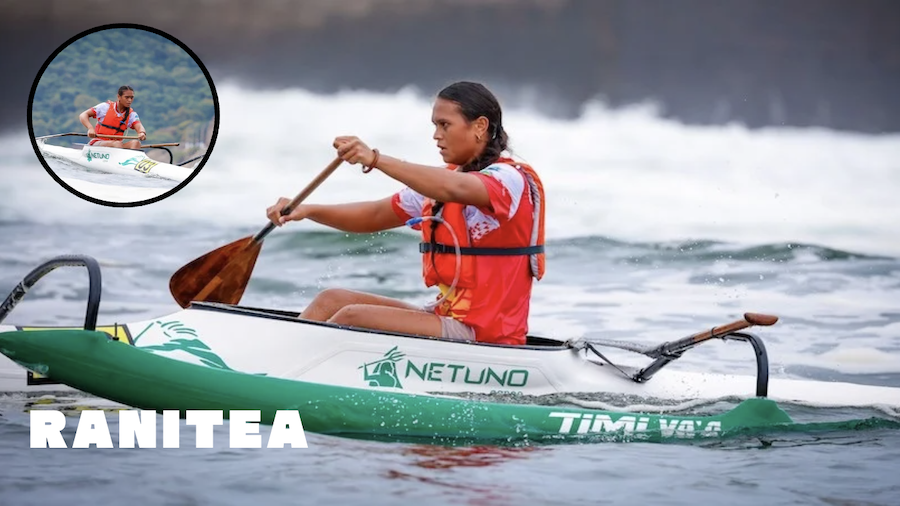
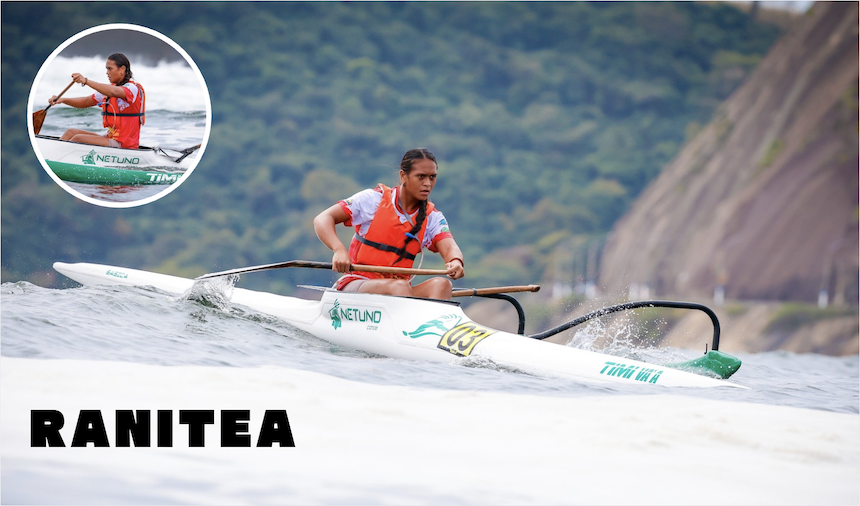
À 21 ans, Ranitea Mamatui avance entre deux mondes. Née et élevée à Tahiti, bercée par le lagon et la culture du Va’a, elle a grandi avec l’océan comme terrain de jeu et comme école de vie. Introduite très tôt à la pirogue par son père, elle y a trouvé bien plus qu’un sport : […]
Sixteen thousand kilometers separate Tahiti from mainland France and that is the distance Ranitea Mamatui chose to cross to pursue her studies. At 21, the Polynesian paddler has traded lagoon waters for a new life at Aix-Marseille University, where she is training to become a physical education teacher. Raised by the ocean and introduced to […]
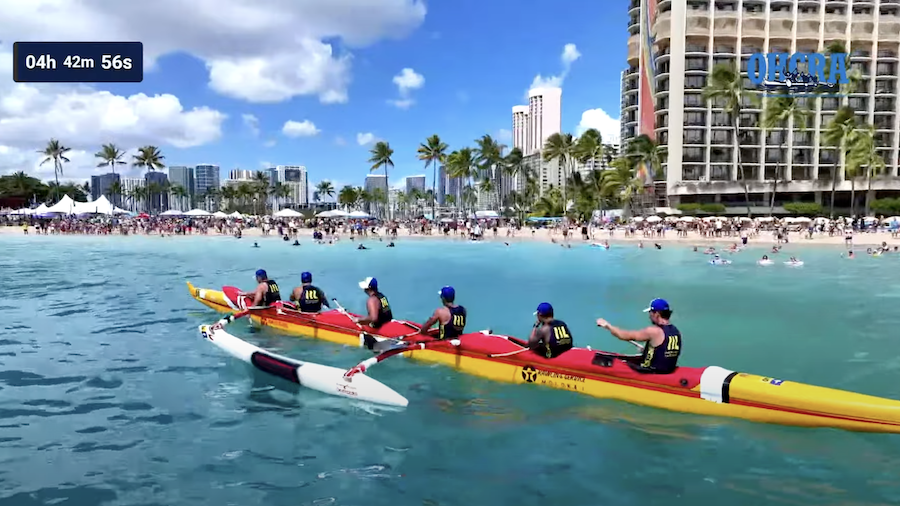
Tahiti’s Team OPT joined the elite list of Molokai Hoe champions on Sunday, conquering the 40.8-mile Ka‘iwi Channel from Moloka‘i to Waikīkī in 4 hours, 42 minutes, and 2 seconds. The first-time winners ended fellow Tahitian powerhouse Shell Va‘a’s three-year reign, with the defending champions finishing second in 4:44:57. “It’s the first win for OPT […]
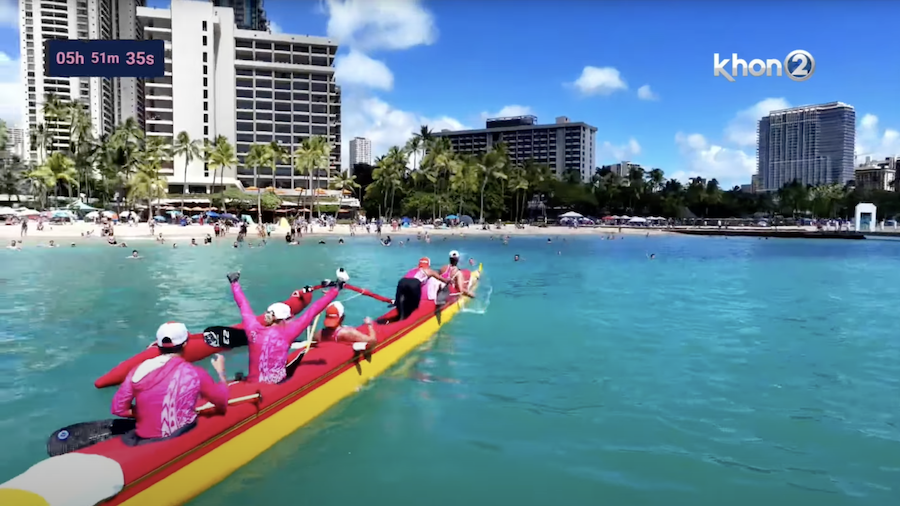
Ihilani Va‘a secured a landmark victory at the 41st edition of the Na Wahine O Ke Kai, presented by the Hawaii Tourism Authority, becoming the first crew from Tahiti to win the prestigious women’s V6 championship. The Tahitian squad completed the 41-mile Kaiwi Channel crossing from Molokai to Waikiki in 5 hours, 51 minutes and […]
Troisième de la mythique Kaiwi Channel Solo entre les îles hawaiiennes de Molokai et Oahu, Iloha Eychenne signe un podium retentissant pour sa toute première traversée en OC1 sur cette course d’exception. Soutenue par les marques tahitiennes ARE Tahiti et Viper, la rameuse tahitienne, marraine de TotalPaddler, confirme son niveau au plus haut et son […]
The 2025 Kaiwi Solo Crossing / Molokai 2 Oahu once again delivered a spectacular showcase of grit, skill, and ocean mastery as paddlers from across the Pacific battled the legendary 32-mile Ka’iwi Channel between Molokaʻi and Oʻahu. In testing conditions, the world’s best outrigger canoe paddlers pushed their limits, with French Polynesian champion Kevin Ceran-Jerusalemy taking […]