From the harbour and fishing heritage of the town to the open water of the Mediterranean, La Vila Joiosa is a natural setting for ocean racing. The local Club Nàutic has already hosted 16 editions of EuroChallenge and the 2018 European Championships, giving the organisers deep experience of putting elite paddlers on the start line.
Now the biggest race of them all has arrived.
The official competition window runs from 9 to 11 October, with athletes racing surfski over approximately 20 kilometres in SS1 and SS2, alongside the junior relay competition. The racing is built around the discipline’s defining ingredient: downwind paddling, where reading the wind, linking bumps and carrying speed can be every bit as important as raw power.
Here are the numbers that tell the story of La Vila Joiosa 2026.
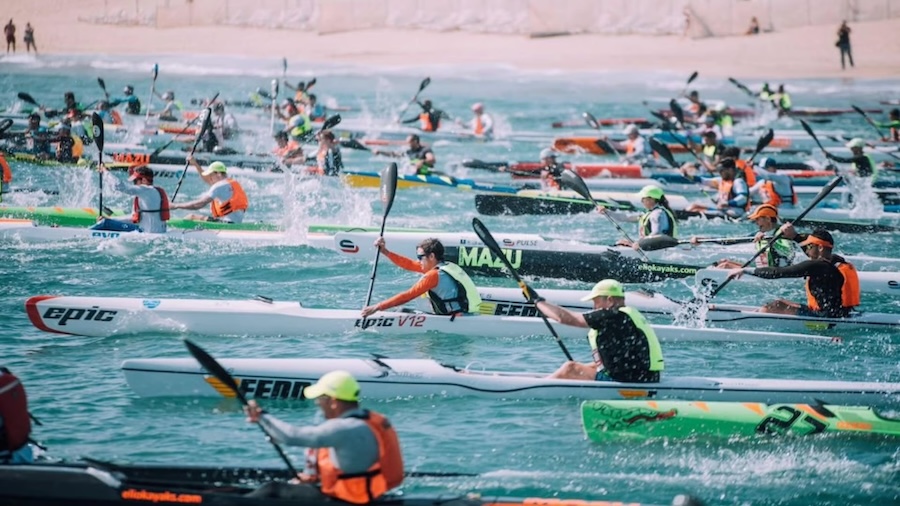
810 — paddlers
That’s the latest figure announced by the host town, with 810 paddlers heading to La Vila Joiosa for the championship.
It is a remarkable gathering of ocean paddling talent, bringing together elite racers, juniors and masters on the same stretch of Mediterranean coastline.
39 — nations
The flags of 39 countries will be represented.
For a discipline that has grown from its roots in Australia, South Africa and New Zealand into a genuinely global sport, that international spread is significant. Europe in particular continues to strengthen, with Spain, Portugal, France and Germany among the nations building increasingly competitive ocean-racing programmes.
20 — kilometres
The championship surfski course is around 20km.
That distance puts the emphasis firmly on ocean racing rather than flat-water speed. Twenty kilometres is long enough for the race to become a tactical battle of energy management, line choice and wave selection — and short enough that a single missed run can change the podium.
In downwind surfski, the fastest paddler isn’t necessarily the one who paddles hardest. The best racers make the ocean work for them.
4 — world titles for Cory Hill
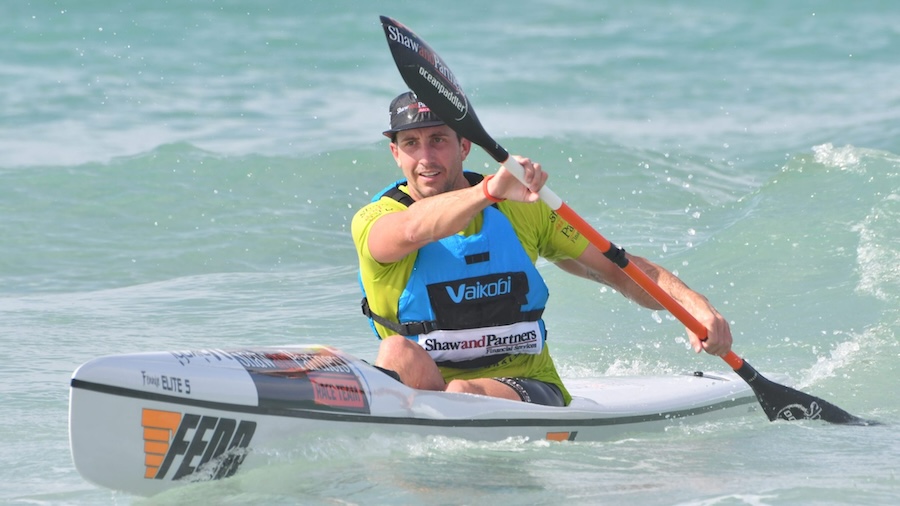
Australia’s Cory Hill arrives as one of the men to beat.
Hill is a four-time world champion and successfully defended his men’s title at the 2025 World Championships in Durban. He also arrives in Spain after winning his fifth Molokai Challenge, underlining the extraordinary level of experience he brings to long-distance ocean racing.
But the field behind him is deep.
Portugal’s Bernardo Pereira, France’s Pierre Vilella, Germany’s Gordan Harbrecht, South Africa’s Nicholas Notten and Spain’s Walter Bouzan are among the names expected to challenge the Australian.
1 — first World Championships of their kind on the Spanish mainland
La Vila Joiosa represents a milestone for Spanish ocean racing.
Although Spain has hosted major international paddlesport events before, this is the first time the Surfski World Championships have been held on the Spanish mainland. The country’s last World Championships were in 2021, while La Vila Joiosa itself has been developing its reputation through EuroChallenge and the 2018 European Championships.
16 — editions of EuroChallenge
Before the World Championships came to town, La Vila Joiosa had already earned its credentials.
The Club Nàutic has hosted 16 consecutive editions of EuroChallenge, one of the best-known fixtures on the European ocean-racing calendar.
That history matters. Surfski racing is notoriously dependent on logistics, safety, local knowledge and the ability to adapt a course to whatever the ocean delivers. La Vila Joiosa has been dealing with those challenges for years.
15 — the age of the youngest competitor
The championship field stretches from teenagers to masters, reflecting one of surfski’s greatest strengths: its unusual ability to put generations of paddlers into the same ocean.
The youngest competitors are 15 years old, while the event also includes a huge masters contingent. The result is a World Championships that feels less like a single elite race and more like a global gathering of the surfski community.
89 — the age of the oldest paddler
And then there is the other end of the spectrum.
The reported age range stretches all the way to 89, an extraordinary reminder that ocean paddling is a sport with genuine longevity.
Few sports can put a 15-year-old and an 89-year-old on the same championship start list.
3 — days of downwind racing
The race window runs across Friday, Saturday and Sunday, October 9–11.
That gives the competition something surfski racers know well: uncertainty.
Wind and swell are not simply background conditions. They shape the race itself. La Vila Joiosa is known for favourable downwind conditions, and the Mediterranean will ultimately decide how much surfing, linking and tactical ocean reading the athletes can put into their races.
2 — boats at the heart of the championship
The World Championships will feature both SS1, the individual surfski, and SS2, the doubles surfski.
SS1 is where the individual world champions will be crowned, but SS2 brings a different dynamic. Two paddlers, one boat, and the need to combine timing, rhythm and wave selection make doubles racing a very different challenge from going solo.
1 — Mediterranean
Perhaps the most important number of all.
After years of World Championship racing in destinations such as Durban, the ocean-racing community now gets a very different setting.
The Mediterranean around La Vila Joiosa is warmer, visually spectacular and deeply connected to the town’s maritime identity. The colourful old town rises above the coastline, while the harbour and fishing tradition remain central to the character of the place.
For visiting paddlers, this is not simply a race venue. It is a chance to experience a part of Spain where Mediterranean culture and ocean sport meet.
And once the flags drop, the scenery becomes secondary.
Twenty kilometres of open water. Hundreds of surfskis. Thirty-nine nations. Three days of racing.
5 – Interesting Vila Joiosa facts
15 km — coastline La Vila Joiosa has 15 km of Mediterranean coastline, with 13 beaches and coves. That is probably the strongest number for a paddling audience.
13 — beaches and coves From the 1.3 km Playa Centro to smaller rocky coves, the coastline changes constantly — a nice way to talk about the character of the venue beyond the race course.
6 — Blue Flag beaches In 2026, six La Vila beaches retained Blue Flag status: Centro, Bol Nou, La Caleta, Paradís, El Torres and Varadero.
23°C — average October sea temperature The Mediterranean here averages around 23°C in October, remaining comfortably warm for paddling while temperatures gradually cool through the winter. With sea temperatures staying relatively mild throughout the year, La Vila is an attractive year-round paddling destination.
3 — chocolate factories This is the quirky one that makes the piece feel like it’s about La Vila, rather than just another World Championship venue. The town still has three operating chocolate factories, alongside its traditional fishing industry.
Welcome to La Vila Joiosa 2026 – Follow the action with TotalPaddler 🙂
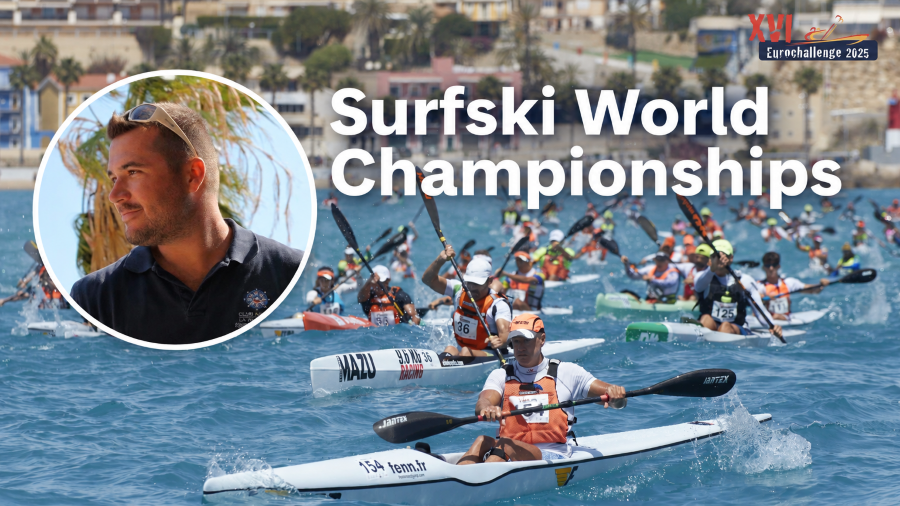
As La Vila Joiosa prepares to welcome the world of Ocean Racing, few people are as closely connected to the town’s journey in the sport as Juan Gordero. An athlete, coach and long-time member of the local club, Juan has been part of its evolution over the years, as La Vila Joiosa established itself as […]
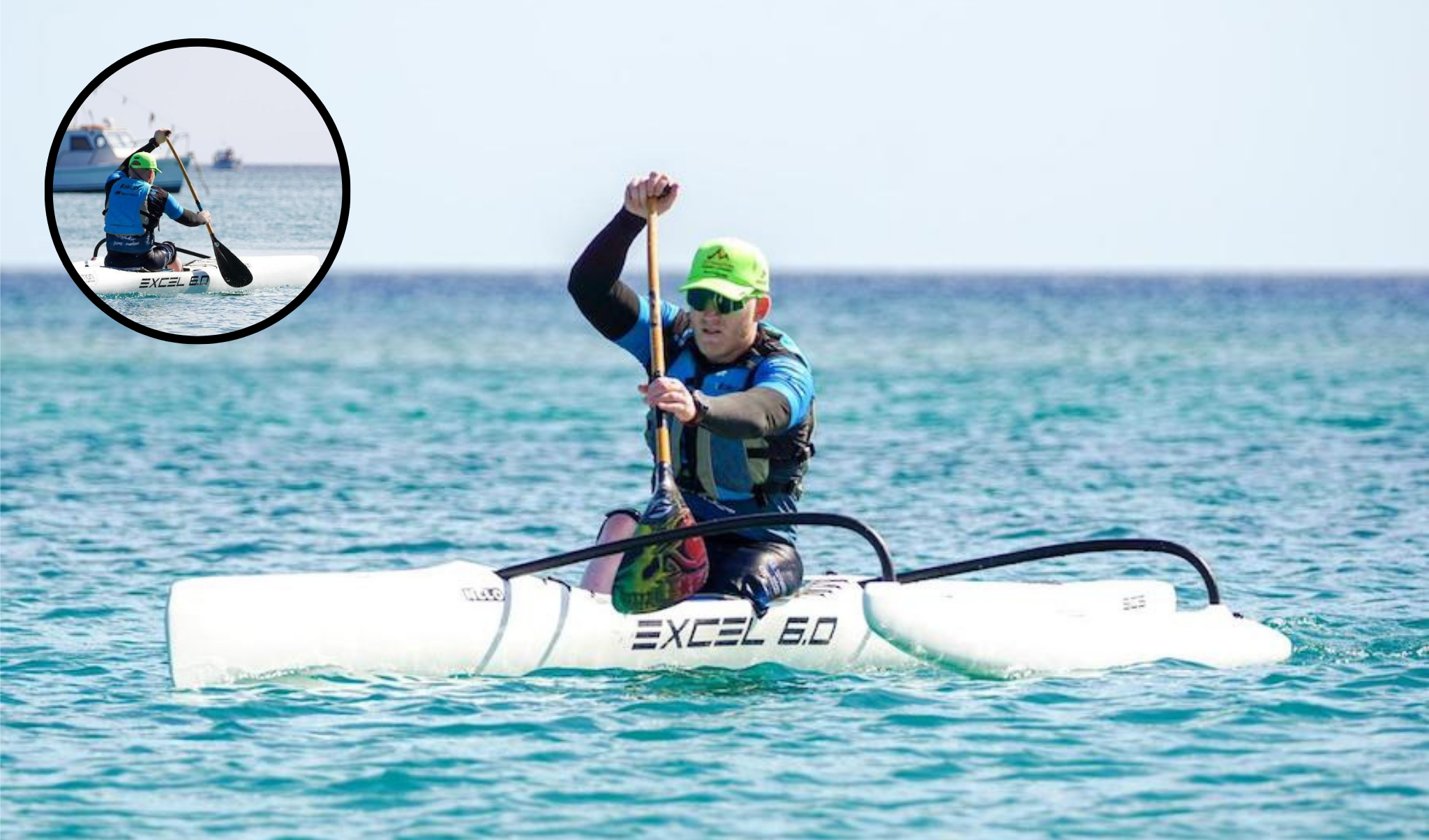
Some athletes are driven by competition. Others are driven by something deeper. For Axel Celmanti, paddle sport became a turning point, a space where discipline, purpose, and self-belief came together. Following the amputation of his leg, he was forced to adapt to a new reality and rediscover his path. What began as a step into […]
Judit Vergés is a surfski, surf lifesaving, and paddleboard athlete from Banyoles, Catalonia, currently based in Las Palmas de Gran Canaria. Over the years, she has established herself at international level, collecting European titles and World Championship medals while continuing to progress across multiple paddle disciplines. Living and training in Gran Canaria has played a […]
The world’s best surfskiers are heading to Durban, South Africa, for what promises to be one of the most exciting ICF Canoe Ocean Racing World Championships ever — and there’s now even more to paddle for. The Local Organising Committee has announced a doubling of the total prize purse to an impressive ZAR 200,000 (around […]