For paddlers, the ocean is both playground and training ground—but it is also a place where the impact of pollution becomes impossible to overlook. A plastic bag caught around an OC1 rudder was one such reminder for Hayden Jamie Li, a young paddler and student from Hong Kong. He was already used to picking up waste while out paddling, but this time it raised a bigger question: what could happen if paddlers acted together?
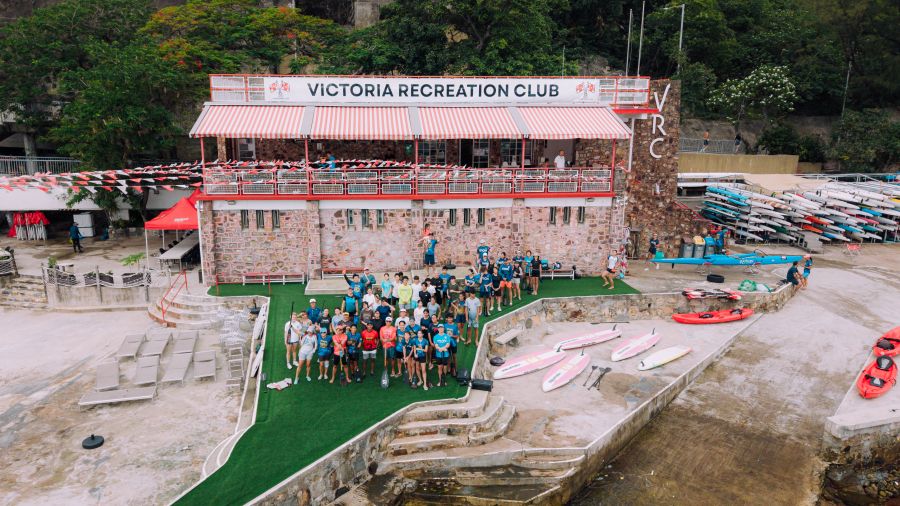
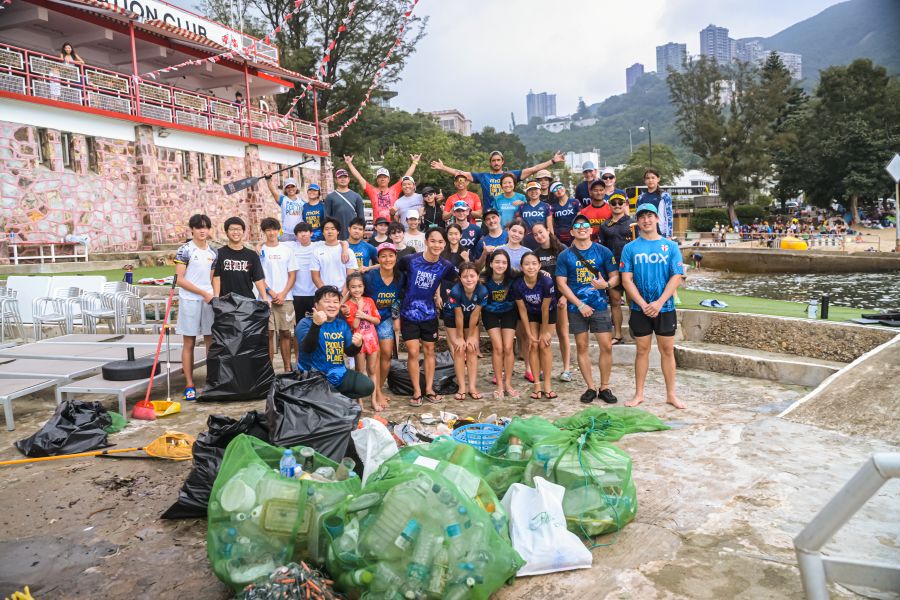
Paddle for the Planet is an initiative that brings the paddling community together through environmental action. In Hong Kong, Hayden and a youth team helped revive the initiative with a collective cleanup at Deep Water Bay, gathering nearly 100 paddlers across OC1, OC2, OC6, SUP, surfskis, kayaks, and dragon boats. What they found along the shoreline—and what happened to the waste afterwards—offered some unexpected lessons about marine debris, recycling, and the importance of acting before waste reaches the shore.
Hayden, tell us a little about yourself, your background in paddling, and what led you to revive this event.
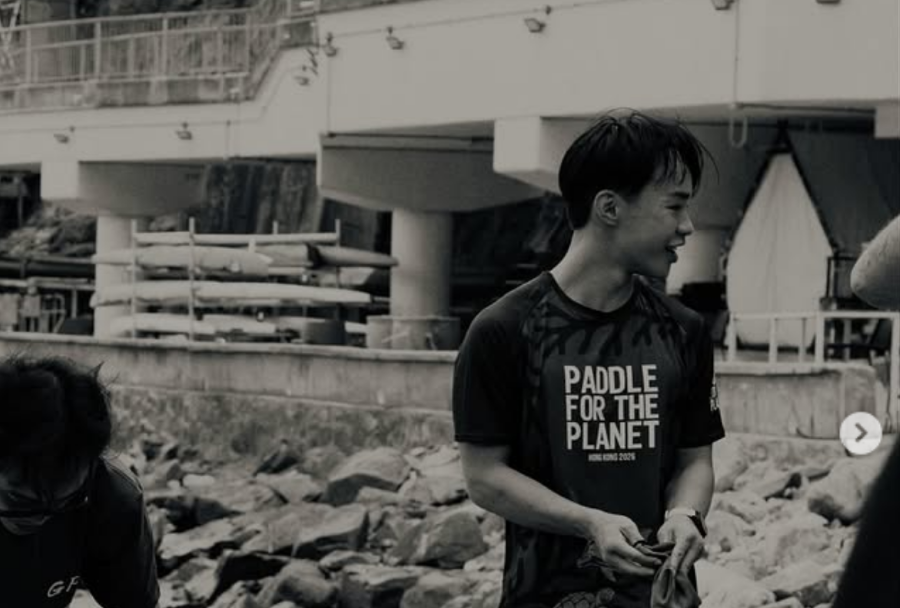
It’s Hayden Jamie Li. I’m the Team Captain of the U18s National Dragon Boat Team in HK, Team Captain and Coach of the VRC Sea Dragons, and most notably, I have placed 2nd in the 2025 Dragon Run in the Juniors OC1 category. I have always grown up around boats and the water, and throughout my high school years began to realise my skill in bringing attention to stuff through my socials. The obvious next step was to ‘revive’ this event that used to happen every year and give back to the community.
When did you first realise that the impact of waste on the places where we paddle called for something beyond simply picking up what you find along the way?
For many paddlers, the ocean is a place of routine. It is where we train, compete, and reset. Over time, it also becomes a place where the problem of marine pollution is impossible to ignore.
For me, that moment came when my OC1 rudder got caught in a plastic bag. It had happened before, but that day it stopped feeling like a minor inconvenience. I already made an effort to pick up trash when I passed it, like many others do, but it started to feel clear that small and isolated actions were not enough.
That was the starting point behind Paddle For The Planet 2026, a youth-led initiative that set out to bring the paddling community together around a shared responsibility.
You were organising this as a student, and there were doubts about whether people would actually show up. What happened when the day finally came?
To be honest, there were doubts from the beginning. I was not sure if anyone would show up. Organising something at this scale as a student felt daunting, and there were questions about whether it would actually come together.But even with that, I decided to go ahead anyway. I had nothing to lose trying!
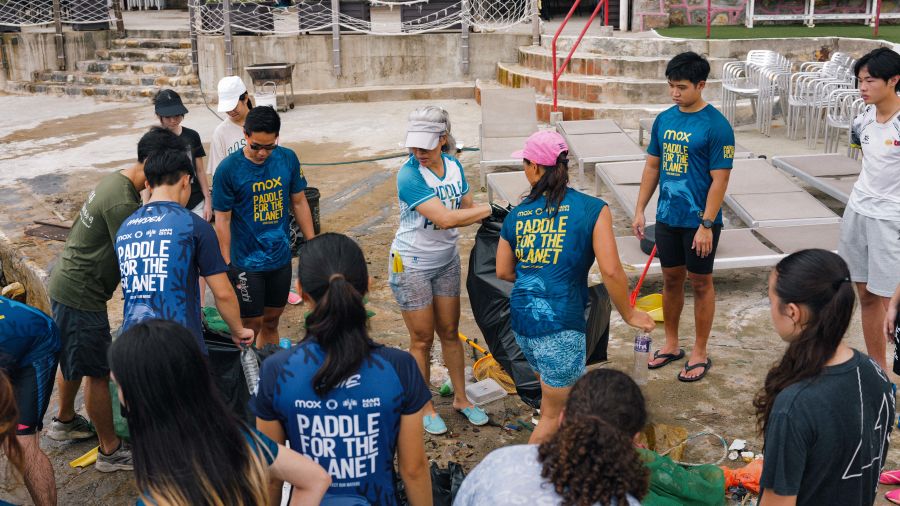
As the day rolled around, nearly 100 paddlers gathered at Deep Water Bay, Hong Kong , launching across a mix of OC1, OC2, OC6, stand-up paddleboards, surfskis, kayaks, and dragon boats. Many participants had never met before, but once on the water, that fact did not seem to matter anymore. Moving in teams and heading toward the same goal of picking up the most trash created a sense of connection early on.
The routes led toward shoreline pockets that are not accessible by foot. These areas quietly collect debris over time, carried in by currents and left untouched. On that day, the low tide exposed just how much had built up.
How did you deal with the waste collected during the event, and what did you learn from the experience?
Our original plan was to sort and recycle what we collected and to work with the local governmental recycling organisation, Green 6, to recycle.
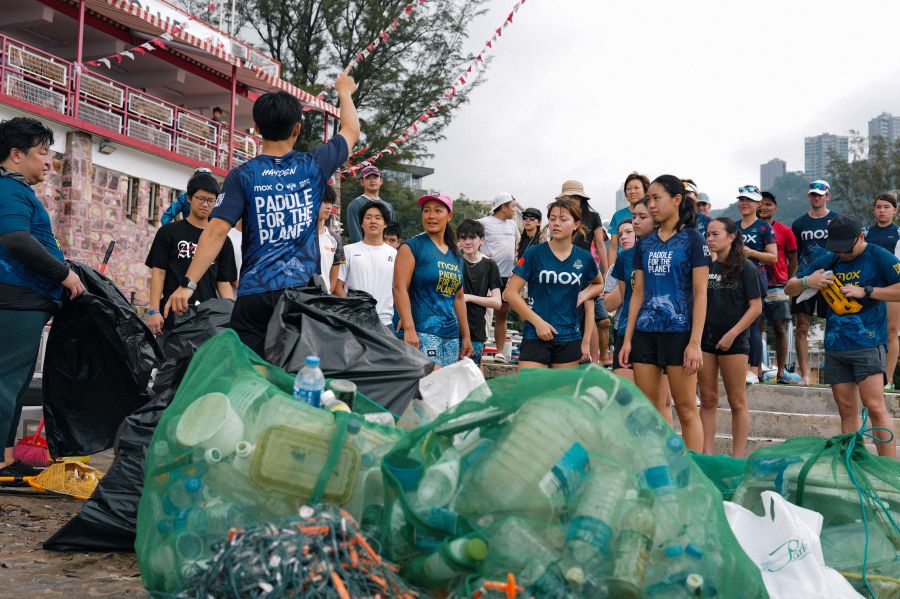
However, a large majority of the trash that was collected could not be recycled. From the event we collected countless plastic bottles, packaging, and other trash that had been mixed with sand and organic matter. Because of that, it simply could not be recycled.
That shifted the way many of us saw the problem.
Following the event, our focus shifted from simply cleaning up trash on the shores to preventing it from reaching them in the first place. If we collect waste while it is still drifting in the water, the material stands a much better chance of being processed and recycled properly. Conversely, if that same litter is left to sit on the shoreline, it degrades and mixes with organic matter. Because of this, the outcome is almost always going straight to the landfill.
After seeing how much of the collected waste could not be recycled, what did you decide to do about it?
This is where the idea of “Take 3 for the Sea” comes in. It is a simple habit. Each time you go out to paddle, pick up three pieces of trash. On its own it feels small, but repeated across a community that is on the water regularly, it becomes something much larger.
What was the most memorable feeling for you as the boats returned?
Beyond the environmental takeaway, the event showed what a coordinated effort can look like. Boats returned to the collection point one by one, each carrying what they had gathered. There was a sense of anticipation in comparing results, but also a shared understanding of what had been seen out there.
For me, there was a moment of nervous excitement paddling back, waiting to see how much others had collected. That feeling summed up what the event became. It was not just about cleaning. It was about doing it together. Most importantly, this was organised entirely by a youth team.
After this edition, what do you hope Paddle For The Planet becomes, and what would you say to paddlers who want to start something similar in their own waters?
I want to bring Paddle for the Planet worldwide!
My hopes is to have tons of chapters in different countries and connect the paddling world through an experience that helps the environment along the way! So if you have a club in Brazil, Hawaii, New Zealand, Tahiti or anywhere for that matter! Feel free to contact us!
There were doubts, and there was uncertainty, but the outcome made one thing clear. This can be done. It does not require perfect conditions or extensive resources. It starts with deciding to act and following through.
If there is one direction this should move in, it is outward. The goal is not to keep this as a single event, but to see similar efforts take place in other places, led by people who see the same problem in their own waters.
If you paddle, you already spend time in the environment you are trying to protect. That alone puts you in a position to make a difference.
Follow updates at @paddle4theplanet , and if you are interested in starting something similar in your own area, reach out and be part of building the next chapter of Paddle for the Planet.
Brazilian paddler Alex Miranda has built one of the most diverse journeys in ocean paddle sports. Originally from Recife and most recently based in Ilhabela — one of the biggest hubs for ocean paddling in the state of São Paulo — he has now returned to Hong Kong to take on an exciting new chapter […]