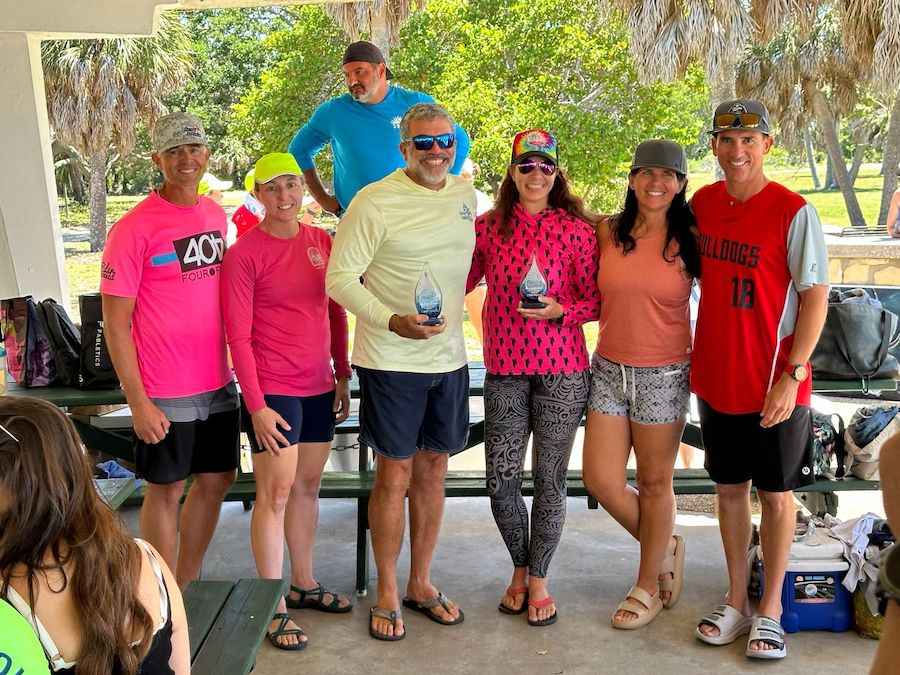
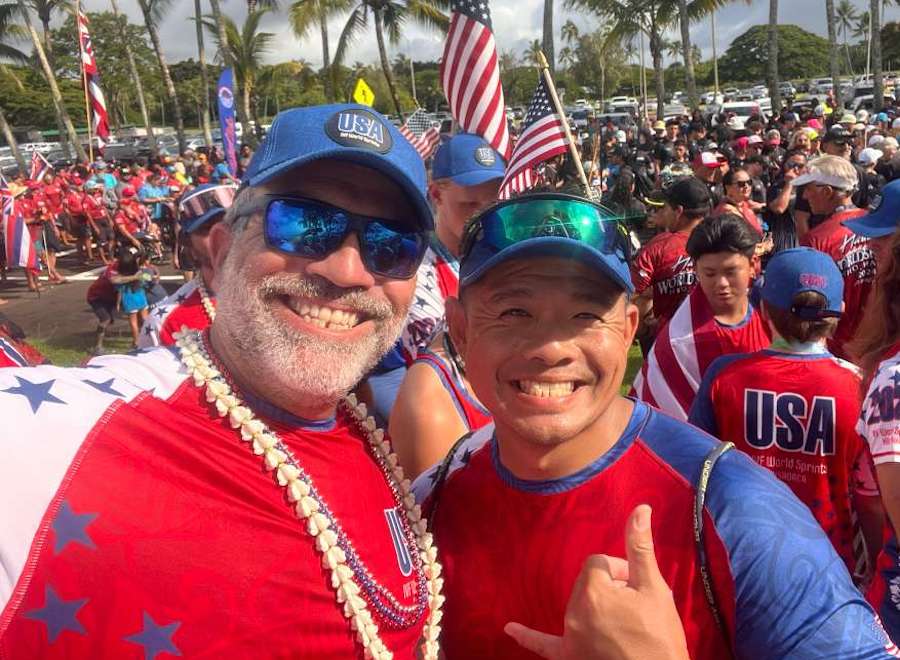
Rooted in the ocean since childhood, Paolo Ameglio has built a life and a career around paddling. Born in Panama and now based in South Florida, he brings over 15 years of coaching experience across outrigger canoeing and dragon boat, including work with the U.S. national teams. As the founder of Florida Paddling Hui, he is deeply committed to growing the sport while fostering a strong sense of community.
Paolo goes beyond performance, focusing on connection, lifestyle, and personal development through paddling. From local waters to international stages, his journey reflects a constant pursuit of progression, both as an athlete and as a coach dedicated to helping others reach their full potential
Hi Paolo, For those who may not know you yet, can you introduce yourself, who you are, where you’re from, and your role in the paddling world?
I’m Paolo Ameglio. I was born in Panama, where I grew up fishing and diving with my dad, so the ocean has always been part of my life. My mother is from New Hampshire, so I also spent time there different waters, but the same connection.
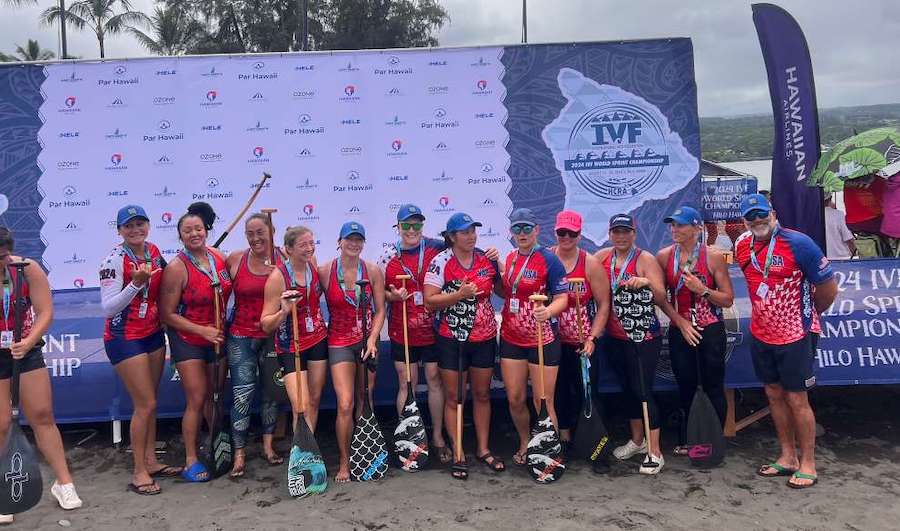
Today, I’m based in South Florida. In the paddling world, I founded Florida Paddling Hui and have been coaching for around 15 years, both locally and nationally, including work with the U.S. National Outrigger and Dragon Boat teams.
At the end of the day, I’m simply someone who loves being on the water and helping others become better at it.
How did you first discover paddling? Was there a particular moment or person that sparked your passion?
I didn’t come into paddling through a formal path, it happened naturally. Because I grew up around boats and the ocean, water was already in my DNA. In the mid-2000s, I discovered dragon boat first, then outrigger paddling shortly after. Coming from a team sports background, both disciplines immediately clicked with me.
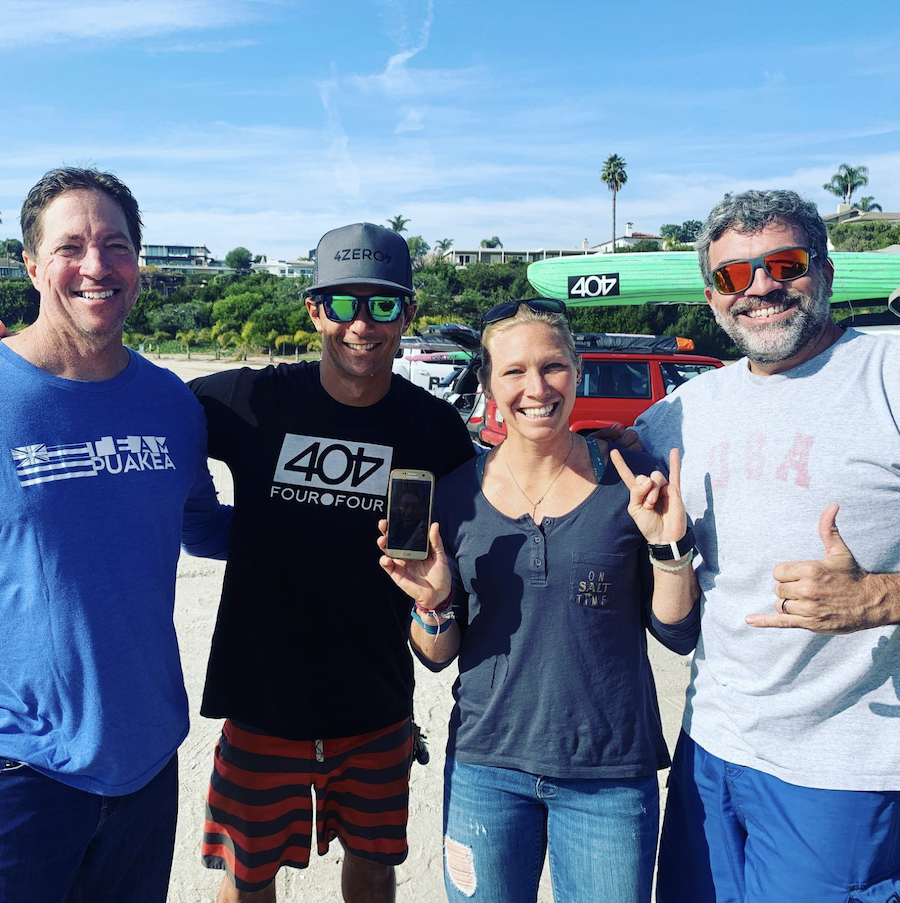
From there, I became a student of the sport, not only wanting to improve myself, but also understanding how to help others improve. Meeting Johnny Puakea was a major turning point. His mentorship, both in paddling and coaching, taught me what truly makes people fast. Spending time in Hawaii paddling with him and the Team Riders expanded my perspective and showed me that paddling is not just a sport, it becomes a lifestyle.
You’re part of the national dragon boat coaching staff. What does it take to coach at that level, and how does it differ from working with club or developing athletes?
Coaching at the national level is a completely different challenge. At that level, everyone is already strong physically, technically, and mentally. It’s less about teaching fundamentals and more about refining details:
Timing
Efficiency
Boat run
Race strategy
Mental focus under pressure
With developing athletes, you build the foundation. At the national level, you sharpen the edge. It becomes about communication, decision-making, and bringing high-level athletes together so they operate as one unit.
As president of Florida Paddling HUI, how would you describe the paddling scene in Florida today? What makes this region unique in the paddling world?
Florida is still growing, but it’s becoming a very exciting place for paddling because of its diversity. I’ve watched the growth firsthand. In Miami, we went from fewer than six OC-1s to almost 60. At the same time:
Central Florida is building thriving new programs
Jacksonville has a passionate outrigger and dragon boat community
Tampa has become one of the strongest hubs in the state
What’s beautiful is that people aren’t only embracing racing, they’re embracing the lifestyle, becoming more connected to the ocean and waterways. Florida may not have the tradition of Hawaii, but it offers: Wind, Chop, Heat and year-round training opportunities. Those conditions can create incredibly versatile paddlers. One challenge, however, is that many paddlers don’t travel enough. Because Florida has great water, it’s easy to become a big fish in a small pond. Racing in places like California, Maui, Oahu, or Hood River broadens perspective and raises standards.
For someone discovering the Key West Paddle Classic for the first time, how would you describe it? What defines its atmosphere and identity?
The Key West Paddle Classic is one of those rare races that feels raw in the best possible way. You start in the open ocean, then head into the backcountry. The course constantly challenges paddlers in different ways. It’s not overly polished, and that’s part of its charm. You get:
Real ocean conditions
A mix of disciplines
Strong camaraderie
Competitive racing with authentic paddling spirit
And being in Key West helps, the local community is incredibly welcoming. This is my favorite type of event because it’s not only about racing, it’s about the experience. No matter where you finish, you leave with a story.
Will you be participating in this edition of the Key West Paddle Classic? And will athletes from your club be joining you?
Yes, I’ll be there, and we’ll definitely have athletes from Florida Paddling Hui participating as well. Events like this are important for us, not only to compete, but to represent what we’re building and stay connected to the wider paddling community.
Your journey into outrigger paddling seems to have been a real turning point. How did small boat paddling influence your performance in both OC-6 and dragon boat?
Small boat paddling changed everything for me. One of my coaches used to say: “If you can’t move your own ass, how are you going to move anyone else’s?” There’s a lot of truth in that. The OC-1 is the ultimate truth teller. It exposes everything:
Strength
Timing
Efficiency
Technique
Accountability
Some athletes may naturally perform well in a team boat, but reaching elite level without spending serious time in a one-man canoe is difficult. If I build a crew where everyone is within about 110% of each other in an OC-1, that crew will move well together. That translates directly into OC-6 and dragon boat, because paddlers understand what the boat needs, not just what their body is doing.
Do you work with or draw inspiration from other high-level athletes or coaches in the paddling world? How have those relationships influenced your approach?
Absolutely, no one grows in this sport in a vacuum. I’ve been fortunate to learn from high-level athletes and coaches who operate with incredible standards. What I’ve taken most from them is:
Attention to detail
Accountability
Purposeful training
The best athletes don’t just train hard, they train with intention. I’ve always believed there are two kinds of coaches:
The ones who say, “This is what I do.” And the ones who say, “This is what you need to do.”
The second type are the best, coaches who study the athlete, understand how they move and think, then adapt their approach. Some major influences in my journey include:
Coach Knight (my track coach in Panama)
Johnny Puakea, mentor and friend
Leanne Stanley
April Zilg
Jimmy Austin
Kawika Crivello Kawika especially embodies the meaning of Ohana Waʻa. If you ever want to understand that spirit, just have a conversation with him.
The 2026 edition of the PA’A Hawai‘i Kaiwi Solo once again delivered an unforgettable showcase of endurance, tactical brilliance, and true ocean mastery as paddlers from across Hawai‘i, Tahiti, the mainland United States, and beyond took on the legendary 32-mile crossing from Molokaʻi to Oʻahu. In classic Kaiwi fashion, the Kaʻiwi Channel tested every athlete […]
Australia has always had a particular relationship with the ocean. For Matt and Josh Walsh, that relationship started early. Growing up as brothers in a sporting family, they tried nearly everything, and excelled at most of it. But it is on the water, aboard their Nalu canoes, that the two brothers found something that stuck. […]